127 Architects Urge State and BMC to Protect Mumbai Open Spaces
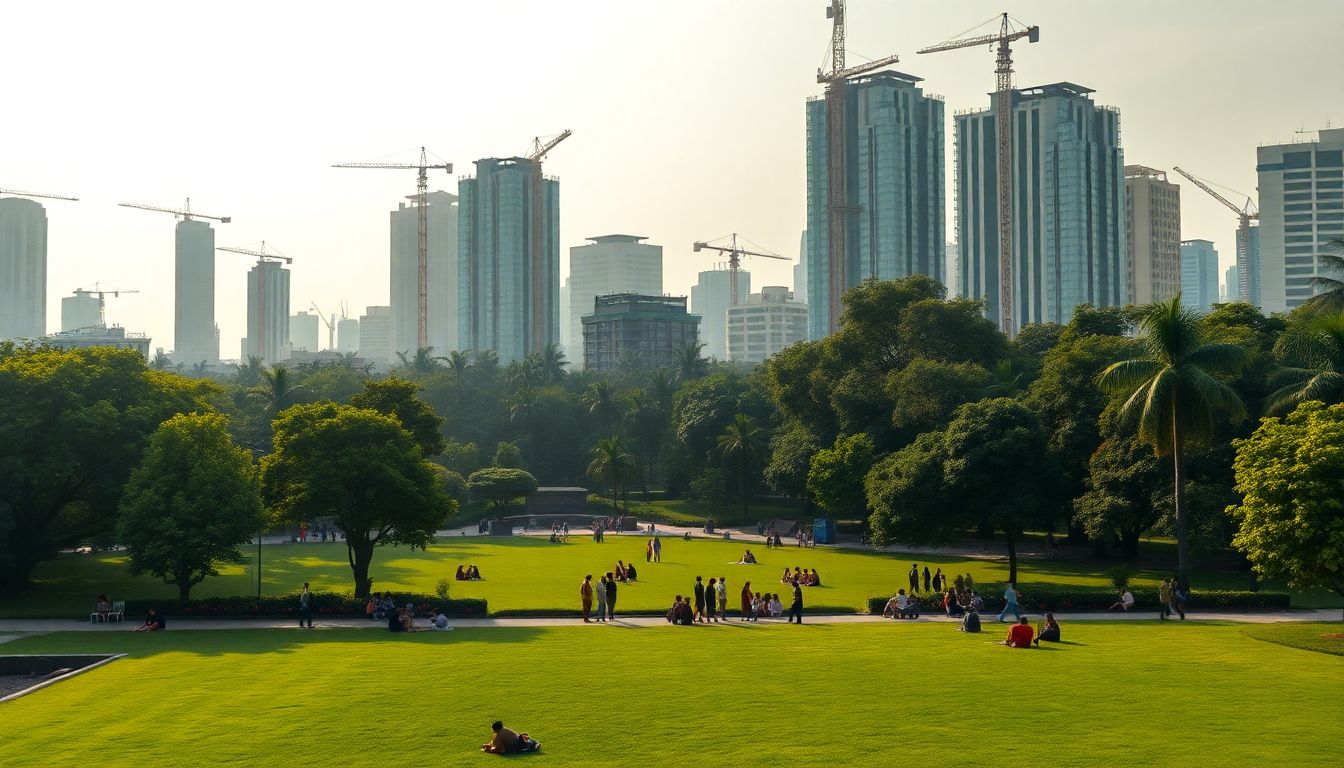
A collective of 127 architects and urban planners, under the banner of the Mumbai Architects Collective (MAC), has urged the Maharashtra Chief Minister and the Brihanmumbai Municipal Corporation (BMC) Commissioner to adopt a long-term vision to safeguard Mumbai's public open spaces and natural ecosystems.
In a statement addressed to the state government and civic leadership, the collective warned that public and ecological assets across the city are increasingly being treated as resources for infrastructure and development projects. The signees called on authorities to assess the cumulative impact of all proposals on the public realm rather than reviewing them in isolation.
The MAC—a voluntary group of architects, urban designers, planners, landscape architects, and allied professionals—highlighted several specific development proposals raising concern. These include plans to convert playgrounds into convention centres, construct underground parking lots beneath parks, redevelop BEST bus depots with commercial components, and monetise portions of open spaces along the Coastal Road.
Highlighting the city's environmental vulnerability, the collective noted that Mumbai currently has just 1.58 square metres of public open space per person. In contrast, London offers 31.68 square metres per person, while New York provides 26.4 square metres per person.
The architects clarified that they do not oppose development, acknowledging Mumbai's need for housing, transport, infrastructure, and economic growth. However, they argued that development must strengthen the city without diminishing public assets, stating that the government holds public land as a trustee for present and future generations.
The collective urged officials to treat parks, playgrounds, former dairy lands, salt pans, wetlands, and mangroves as essential public infrastructure rather than vacant land awaiting construction. These natural spaces absorb stormwater, recharge groundwater, reduce severe flooding, improve air quality, moderate temperatures, and support biodiversity.
Architect Vikas Dilawari, one of the signatories, stressed the need for a holistic planning approach. He noted that recent decisions have not been good for the city, adding that professionals have a duty to flag civic concerns and propose solutions.
Warning against replacing permeable land with paved surfaces, the group called for integrated water management to control flood risks. They urged that higher redevelopment densities be accompanied by extra public open spaces, schools, healthcare, mobility infrastructure, tree cover, and civic amenities.
To improve transparency, the MAC demanded that the BMC publish an annual ward-wise report detailing the status of public infrastructure, including parks, open spaces, footpaths, and amenities.