BEML Develops 249 Kmph Indigenous Bullet Train for Mumbai-Ahmedabad Corridor
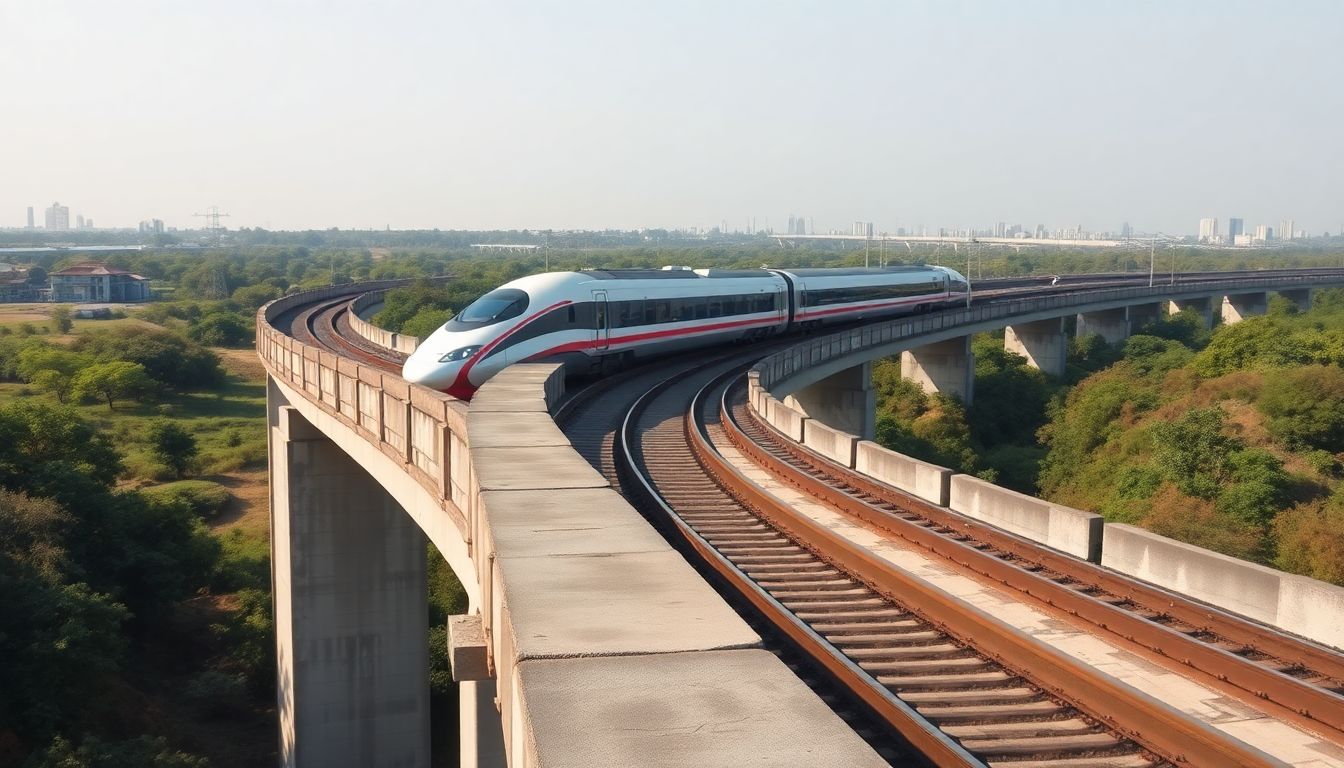
India's first indigenously built bullet train is currently being developed at BEML's factory in Bengaluru for the Mumbai-Ahmedabad high-speed rail corridor. Designed specifically to suit Indian travel conditions, the train will operate at a speed of 249 kmph and has a designated test speed of 280 kmph. It will provide a total seating capacity for approximately 557 passengers.
The train set will measure around 202 metres in length and will be assembled with four motor cars and four trailer cars. Its layout includes seven standard-class coaches configured in a 3+3 seating arrangement and one executive-class coach with a 2+2 seating setup. Design plans incorporate comfortable seats with adequate legroom, large windows, overhead luggage racks, and dedicated storage spaces for larger baggage items.
Onboard passenger conveniences include charging outlets for mobile phones and laptops situated near the seats, alongside a Wi-Fi-based entertainment system that provides access to pre-loaded media. Modern bio-digester toilets will be fitted across the train, and vestibule passages connecting adjoining coaches will allow passengers to move freely throughout the train.
Accessibility features form a major component of the train's design to accommodate passengers with disabilities. The carriage floors will sit level with station platforms to ease boarding and disembarking, aided by door mechanisms designed to narrow the gap between the platform and the train. The interiors will also include dedicated wheelchair spaces, accessible toilets, and Braille signage.
Passenger information will be relayed via LCD display screens in English, Hindi, and regional languages, complemented by an audio announcement system. Passengers will also have access to an emergency communication system to contact onboard staff. Climate control will be maintained through two heating, ventilation, and air-conditioning units installed in each coach, while dedicated sound-dampening layers across the walls and flooring are aimed at suppressing external noise.
Technically, the train will operate on a 25 kV, 50 Hz power supply network and feature regenerative braking systems designed to capture kinetic energy during deceleration and return it to the grid. The exterior incorporates an aerodynamic shape shaped by computer-based airflow simulations to lower air resistance and reduce pressure variations and noise when traversing tunnels.