Bombay HC Orders Stamp Duty Refund of Rs 70.12 Lakh for Balewadi Project

The Bombay High Court has directed Maharashtra stamp authorities to refund Rs 70.12 lakh in stamp duty to Pune-based partnership firm Sai Innovation, ruling that a cancelled agreement for an 8,000-square-metre land parcel in Balewadi, Pune, had failed to achieve its intended purpose.
In a judgment pronounced on August 20, Justice Amit Borkar allowed a writ petition filed by Sai Innovation through its partner Shankar Pandurang Jagtap. The court quashed previous orders issued by the Joint District Registrar and Collector of Stamps, Pune City, as well as the Deputy Controller of Stamps, Pune, which had rejected the refund claim.
The High Court ordered that the refund amount carry simple interest at 6% per annum from April 7, 2014, until the date of actual payment. The authorities have been directed to disburse the amount with accrued interest within six weeks from the uploading of the judgment.
The dispute began after Sai Innovation executed a registered development agreement on April 15, 2013, with the owners of the Balewadi land, paying Rs 70,12,500 in stamp duty. The project stalled when building plans could not be sanctioned within a reasonable timeframe, leading to disputes between the parties. On February 18, 2014, the parties executed a cancellation deed, registered on February 24, 2014, and the landowners returned the consideration received from the developer.
The firm applied for a stamp duty refund on April 7, 2014, but the Deputy Controller of Stamps declined to recommend it, and the Joint District Registrar rejected the application in December 2014. The authorities maintained that the agreement did not fall within the proviso to Section 48(1) of the Maharashtra Stamp Act, 1958.
Justice Borkar ruled that the authorities approached the issue incorrectly, clarifying that Section 47(c)(5) provides the substantive right to seek a refund when an instrument fails of its intended purpose, while Section 48 sets the limitation period. The court noted that a document cannot be denied a refund simply because it is labelled a development agreement rather than a conveyance.
The court also dismissed the state's argument regarding possession, holding that the developer was merely granted a license to enter and prepare the site, without full legal possession being transferred.
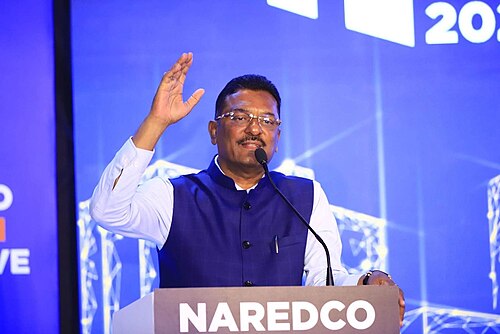
Hitesh Thakkar, Vice President of Naredco Maharashtra, welcomed the judgment, stating that the order sets an important precedent and brings clarity for developers seeking refunds on cancelled agreements.