Bombay High Court Asks if Hindu Scriptures Require Immersion of PoP Idols
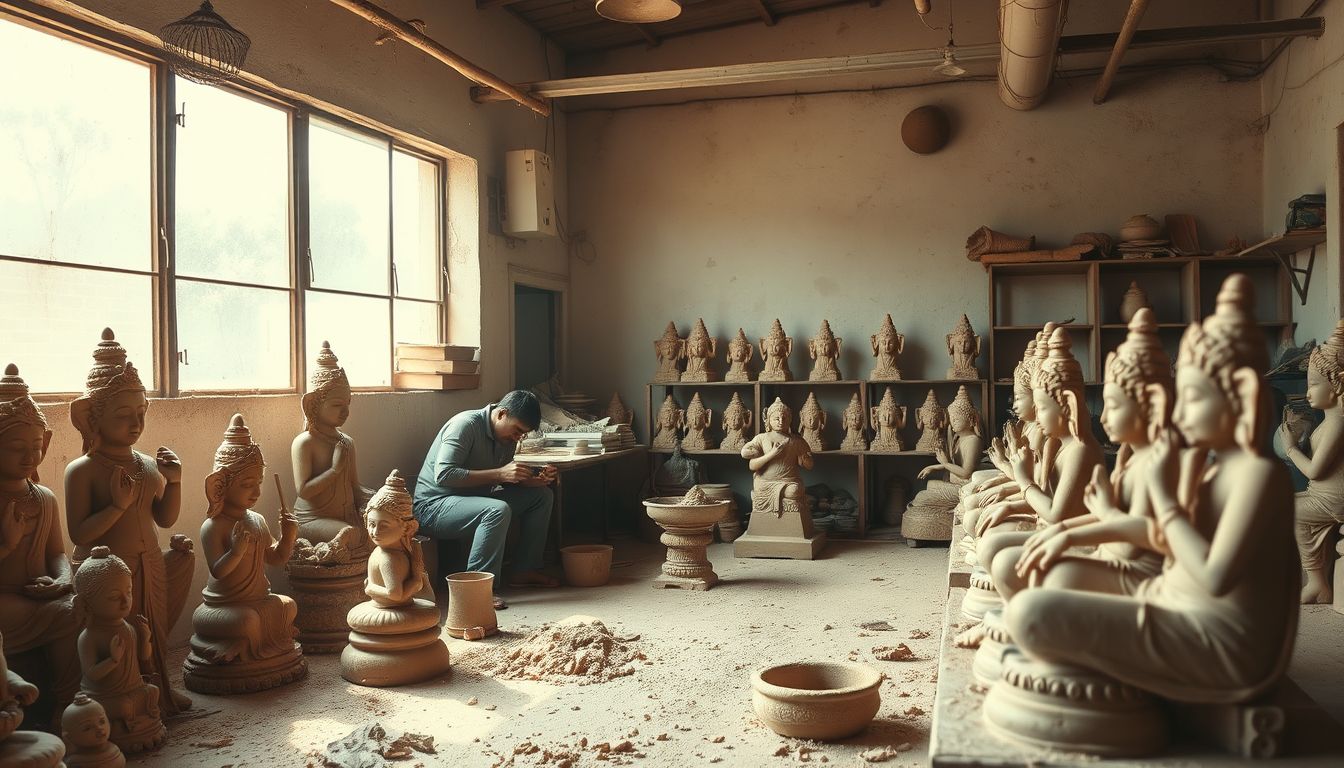
The Bombay High Court in Mumbai on Tuesday questioned whether Hindu scriptures mention the immersion of Plaster of Paris (PoP) idols in water during a hearing on guidelines regarding idol immersion.
A division bench of Justices Ajey Gadkari and Kamal Khata raised the query while hearing a public interest litigation filed by two activists and nine clay artisans. The petitioners are seeking the implementation of the Central Pollution Control Board’s (CPCB) May 2020 revised guidelines that ban PoP idols, while also challenging the state’s August 1, 2025 immersion guidelines and policy.
Senior advocate S M Gorwadkar, representing PoP artisans, noted that he had previously suggested symbolic immersion of large idols to curb pollution, calling it a step ahead under fundamental duties under Article 51 A (g). He pointed out that the state’s immersion policy already provides for a separate small idol for immersion. Gorwadkar added that with the CPCB clarifying its amended guidelines are advisory, there was nothing left for his clients to challenge. He stated that idol-making forms a minuscule fraction of total PoP output, advocating for a broader policy to handle PoP waste created by construction and medical uses.
Advocate Uday Warunjikar, representing Akhil Sarvajanik Utsav Samiti Maharashtra on behalf of festival mandals, argued against symbolic immersion, stating that Dharma Shastra does not permit symbolic visarjan.
The bench asked Warunjikar to produce a scripture stating that a PoP idol must be immersed. Warunjikar replied that 3,000 years ago when the scriptures were written, PoP did not exist and idols were immersed. The hearing will continue on Wednesday.