Bombay High Court Clears Demolition of 3,416 Hutments Along Kurla-Trombay Line
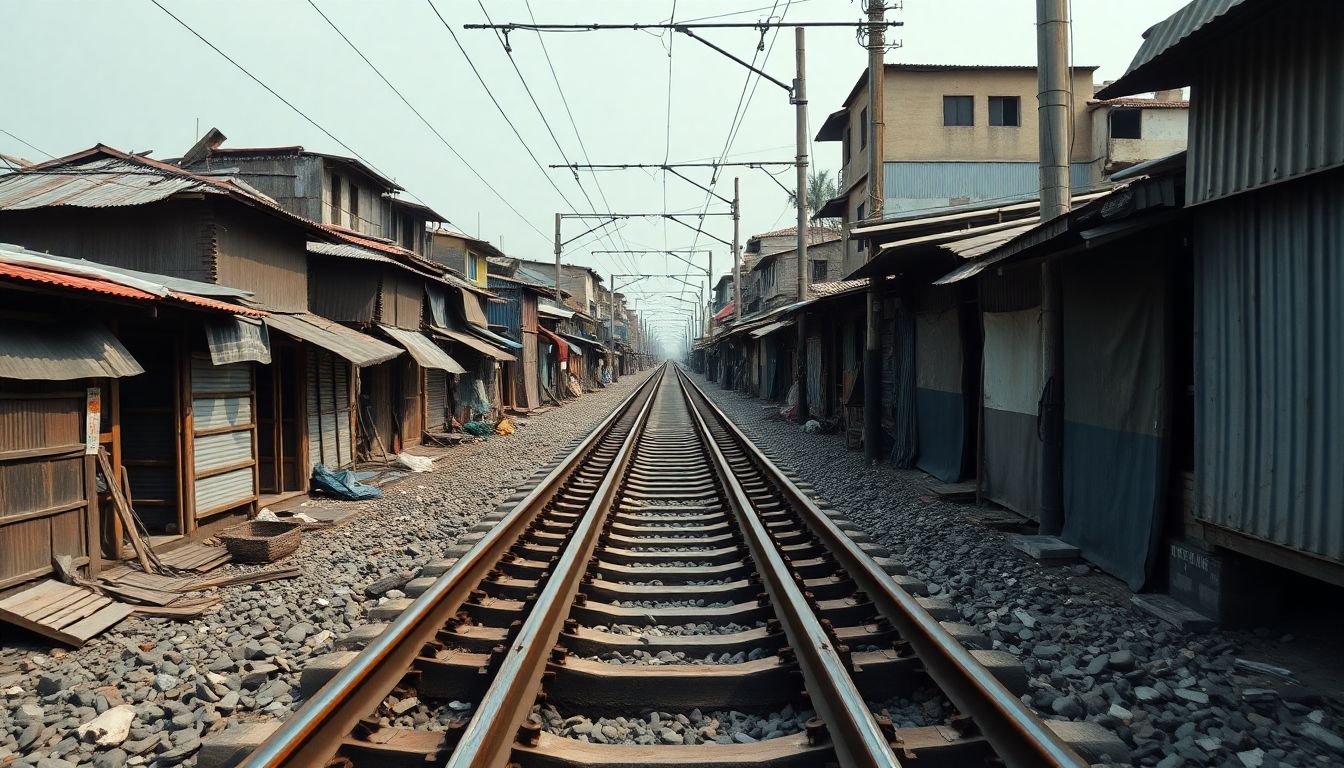
The Bombay High Court has cleared the way for action against 3,416 encroaching hutments in the railway safety zone along the Kurla-Trombay corridor, observing that illegal structures cannot block an urgent track expansion. In an August 10 order, a Bench headed by Justice Bharati Dangre stated that the safety-zone slum must yield way to the Railway, while emphasizing that evictions must strictly follow Supreme Court rehabilitation guidelines.
Railway data presented to the court shows that 3,762 hutments occupying approximately 9,000 square metres have been identified as encroachments along the Kurla-Trombay section. Demolition notices were issued to all structures, but 346 obtained court protection, leaving 3,416 hutments subject to demolition.
Demolition proceedings had been stalled following an interim order passed in January 2023. Although that protection was scheduled to end on February 10, 2023, it continued on prima facie grounds. The Bench noted that the issue must come to an end given the Railway's urgent need for track expansion, and directed railway counsel to produce a booklet containing encroacher addresses and contact details at the next hearing.
Under the Supreme Court safeguards mandated by the Bench, authorities must conduct a survey of occupants in the safety zone, draft a list of eligible residents, and forward it to the District Collector to arrange rehabilitation after eviction. The court permitted petitioners to implead the Mumbai Suburban District Collector as a respondent and listed the case for August 20.
The issue reflects broader encroachment challenges across Mumbai's suburban rail network. Central Railway has recorded 13,839 illegal structures across 37.29 hectares, concentrated primarily along the Kurla, Mankhurd, and Kurla-Trombay stretches. On Western Railway, 10,572 unauthorised structures have been identified, with the highest concentration found along the Bandra-Khar belt.