Bombay High Court Extends Ban on Immersion of PoP Idols in Natural Water Bodies
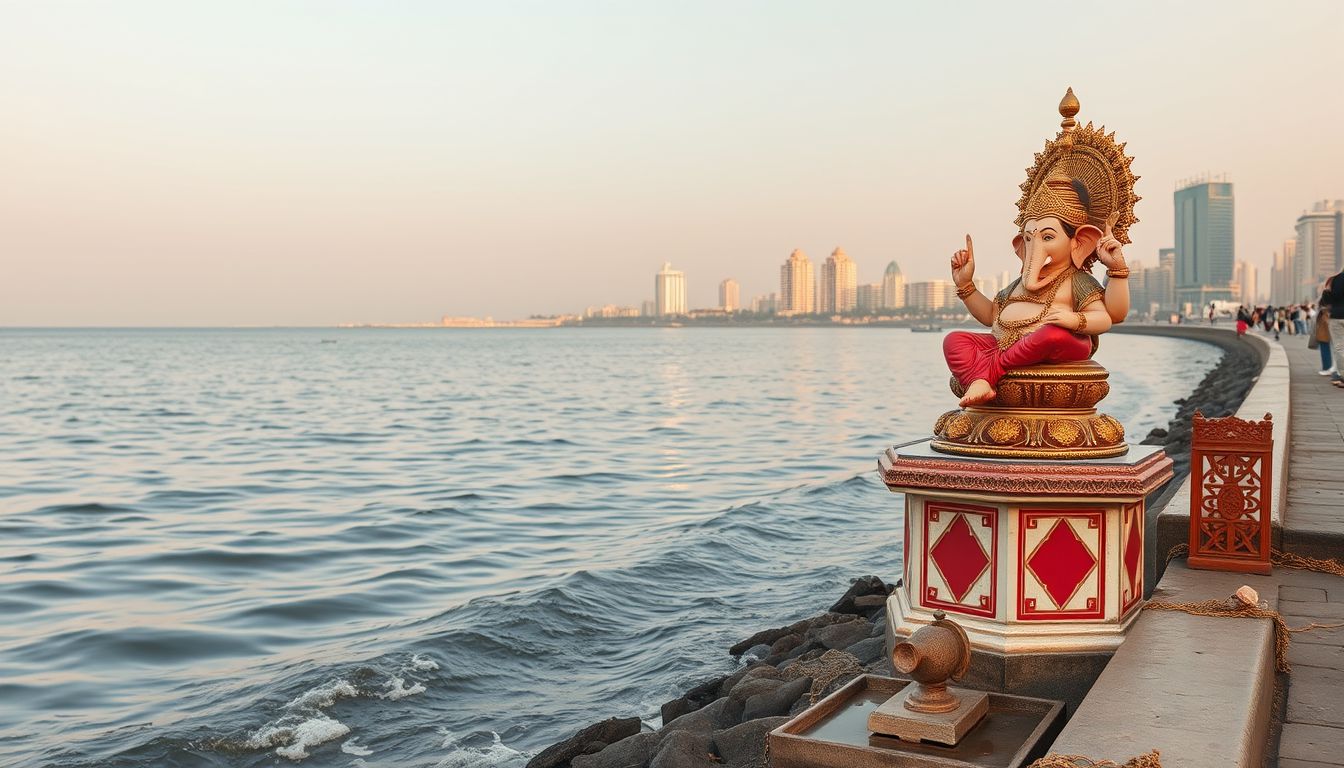
The Bombay High Court in Mumbai continued its interim restriction on Friday prohibiting the immersion of Plaster of Paris (PoP) Ganesh idols in natural water bodies without the court's permission, while reserving its verdict on a batch of petitions regarding the issue.
A division bench comprising Justices Ajay Gadkari and Kamal Khata ruled that the interim order, originally issued on June 9, 2025, will remain in force until a final judgment is delivered on the petitions filed both supporting and opposing the use of PoP for crafting idols.
The June 9, 2025 interim order had previously lifted restrictions on the manufacture and sale of PoP idols after the Central Pollution Control Board (CPCB) revised its stance. For nearly five years, the CPCB had prohibited the production and sale of PoP idols, but it informed the court last year that its guidelines were only advisory. While the court permitted the manufacture and sale of the idols, it explicitly barred their immersion in natural water bodies without prior court clearance.
During Friday's proceedings, advocate Ronita Bhattacharyya, representing environmental activist Rohit Joshi, argued that the Maharashtra government's policy was ineffective. The state policy had permitted idols up to six feet tall to be immersed in artificial ponds while allowing larger idols into natural water bodies.
Bhattacharyya submitted photographic evidence from the previous year's immersion showing that PoP idols up to six feet in height were still immersed in natural water bodies in violation of court directions and government rules. She argued that because PoP idols are manufactured in the lakhs, the state's policy cannot be effectively enforced.
The counsel also dismissed claims that there was no scientific basis proving PoP to be a pollutant. She pointed out that a committee comprising scientists and experts, including representatives from the National Environmental Engineering Research Institute (NEERI), had been constituted following court directives.
Bhattacharyya further submitted that the state government's attempt to revive the expired policy contradicted the Prime Minister's call for using traditional clay idols. The Maharashtra government's previous policy, introduced last year, expired in March, and the state has sought to re-implement the same framework.
After concluding hearings from the petitioners, the state government, and other intervenors, the high court reserved its judgment.