Bombay High Court Quashes BMC Compensation Order for Goregaon Flyover Project
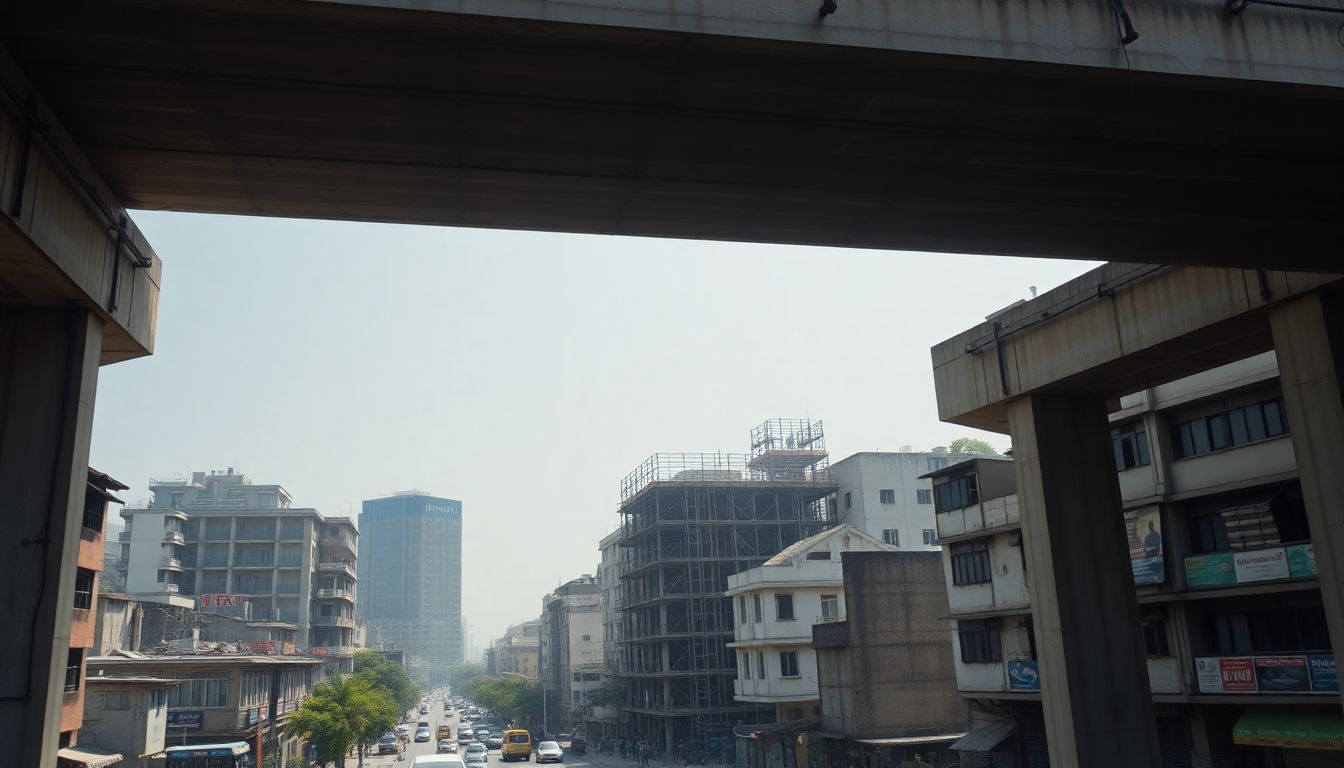
On July 18, 2026, the Bombay High Court ruled that the Brihanmumbai Municipal Corporation (BMC) must initiate fresh land acquisition proceedings to fairly compensate property owners in Goregaon whose buildings were demolished for a road and flyover project. Justices Manish Pitale and Shriram Shirsat quashed a 2018 municipal order that had determined compensation under provisions meant only for open land, directing the civic body to apply the 2013 national land acquisition law instead.
The ruling came in response to petitions filed by lessees Rohan Tiwari and others, alongside landowner JD and Company Pvt. Ltd. The petitioners' properties had been acquired by the BMC for the construction of a road and flyover in Goregaon. On June 11, 2018, the Deputy Municipal Commissioner had issued an order fixing the compensation for the lessee-petitioners at Rs 2,17,97,650.
According to the petitioners, the BMC first informed them in October 2013 that a portion of their property was required for the proposed flyover. The civic body offered them options of monetary compensation, Transferable Development Rights (TDR), or relocation. While the petitioners insisted that compensation must be paid before the BMC took possession of the land, municipal officials allegedly began demolishing the structures in February 2016 without prior payment.
The legal dispute centered on the method the BMC used to calculate the compensation. The civic body relied on Sections 298 to 301 of the Mumbai Municipal Corporation (MMC) Act, which govern land falling within the regular line of a public street.
However, the petitioners argued that these specific provisions only apply to open land or external structures like platforms and verandahs, rather than permanent buildings. They maintained that the acquisition should have been conducted under Section 296 of the MMC Act, read alongside the Right to Fair Compensation and Transparency in Land Acquisition, Rehabilitation and Resettlement Act, 2013, which ensures compensation based on market value.
The High Court agreed with the petitioners, stating that the BMC had applied the wrong legal provisions. The bench observed that Section 299 of the MMC Act does not apply the moment a building exists on the land.
The court also found that the 2018 compensation order violated the principles of natural justice because the landowners in one of the petitions were not given a hearing before the compensation amount was finalized.
The High Court has now directed the BMC to start fresh acquisition proceedings under the 2013 Act and complete the entire exercise within one year. The court clarified that any disputes between the landowners and lessees regarding their shares of the final compensation can be resolved separately once the fresh award is issued.