Civil Rights Groups in Mumbai Plan Supreme Court Challenge to Religious Act
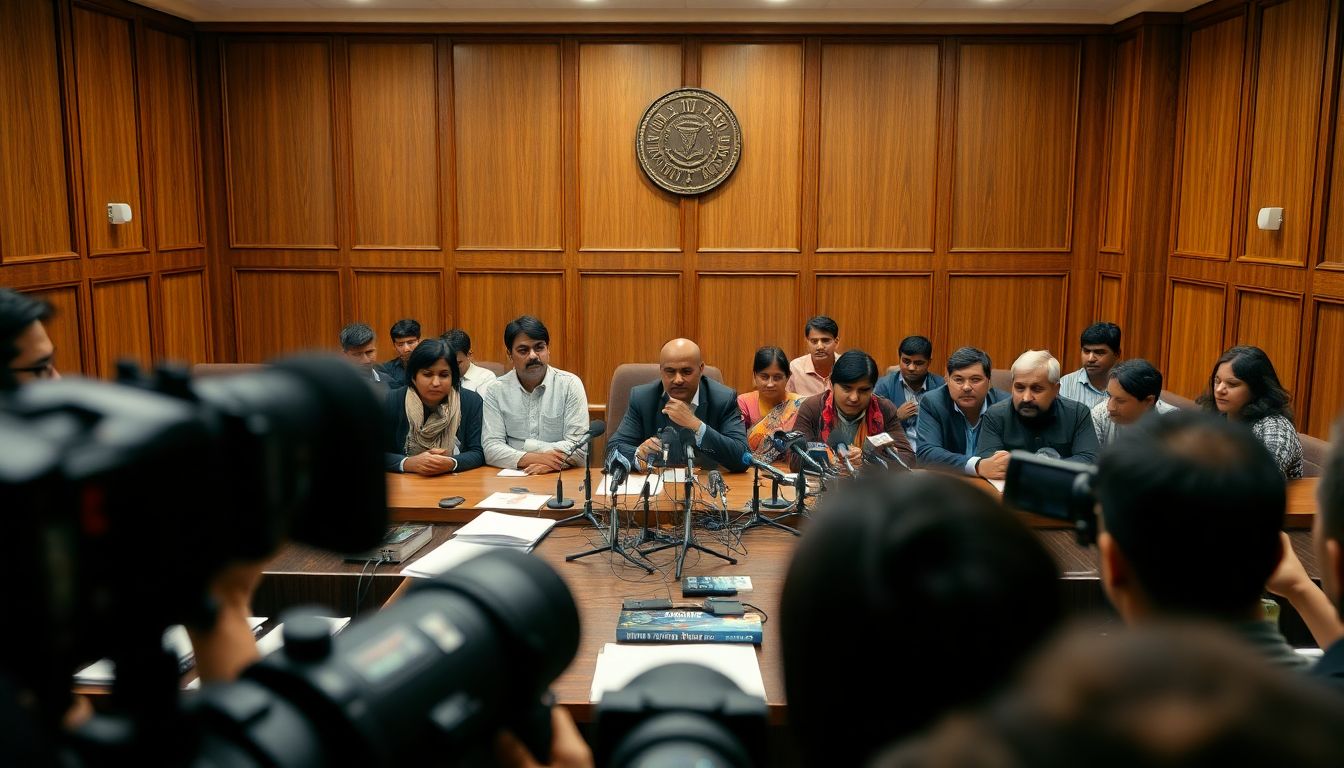
A coalition of 20 civil society organisations, women’s rights groups, and religious bodies issued a joint declaration at the Mumbai Marathi Patrakar Sangh on Monday against the Maharashtra Freedom of Religion Act, 2026. The organisations announced that three member groups are actively preparing to move the Supreme Court of India to challenge the constitutional validity of the legislation, which is scheduled to take effect on August 28.
The coalition demanded that the Maharashtra state government immediately withdraw the notification or place the law on hold pending decisions by the apex court on similar state-level anti-conversion statutes. Panelists stated that the law creates an administrative regime over private matters of faith and individual choice by enforcing advance notice requirements, mandatory declarations, and post-conversion reporting obligations.
Three organisations—the People's Union for Civil Liberties (PUCL), the Association for Protection of Civil Rights (APCR), and the Forum Against Oppression of Women—are currently preparing the legal challenge for the Supreme Court. Representatives raised concerns over provisions that classify alleged violations as cognisable and non-bailable, while shifting the burden of proof onto the accused.
Speakers at the press conference argued that vaguely defined terms in the act, such as "allurement," risk criminalising routine charitable work, educational assistance, and religious preaching. They also noted that provisions permitting complaints from relatives could be used by vigilante groups to target consenting interfaith couples.
Advocate Irfan Engineer, Director at the Centre for Study of Society and Secularism, stated that existing laws are already sufficient to address forced conversions and argued that the new legislation infringes on constitutional rights. Human rights advocate Lara Jesani voiced concern that mandatory public notices could lead to increased harassment of interfaith couples by vigilante groups.
Sandhya Gokhale of PUCL noted that the act disproportionately impacts women, Dalits, Adivasis, and young adults by restricting personal autonomy in choosing partners and religious beliefs. Organisers also stated that Christian institutions in the Greater Mumbai region have recorded approximately 30 incidents of harassment by vigilante groups over the past eight months.
Fr. Frazer Mascarenhas, former principal of St. Xavier's College, expressed concern that educational support and charitable activities provided by minority institutions could be misconstrued as illegal inducements under the new law.