Final 1.4-km SCLR Extension Opens, Connecting BKC to Western Express Highway
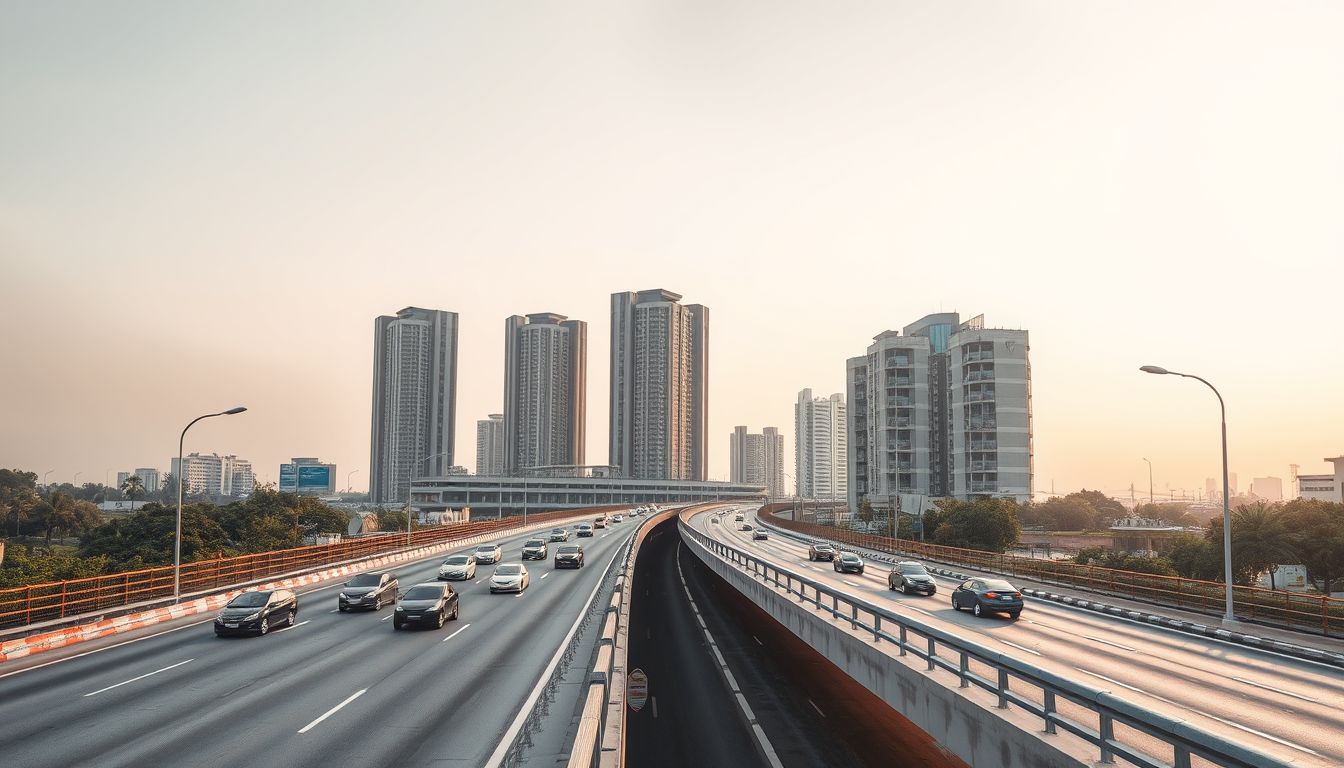
The final stretch of the Santacruz-Chembur Link Road (SCLR) extension has opened to the public, completing the integrated 10.30-km SCLR network between the Eastern Express Highway and Western Express Highway while providing direct connectivity through Bandra and the Bandra-Kurla Complex (BKC).
The newly opened 1.40-km Bharat Nagar Road (University Area)–Vakola Junction Elevated Corridor was constructed under Phase II of the SCLR Extension project. Developed by the Mumbai Metropolitan Region Development Authority (MMRDA), the stretch serves as the final and critical component in the larger east-west transit network, which has been built in progressive phases following the launch of the original SCLR.
With the completion of Phase II alongside earlier Phase I extensions, the fully operational SCLR network now offers end-to-end, signal-free east-west connectivity across key locations. The corridor connects the Eastern Express Highway, Western Express Highway, Bandra-Kurla Complex, Santacruz, Chembur, Kalina, Mumbai University, Tilak Nagar, Kapadia Nagar, and Kurla.
According to the latest data from the MMRDA, the newly opened elevated corridor establishes seamless two-way movement between BKC and the Western Express Highway. Traffic moving from BKC will merge directly with the SCLR cable-stayed bridge. Meanwhile, commuters entering from the Western Express Highway will transition from the existing Vakola Flyover straight onto the new elevated corridor.
The completed elevated network is expected to significantly ease traffic conditions by allowing motorists to completely bypass bottleneck areas in Kalina, Vakola, and Kalanagar. Motorists travelling along key east-west routes are expected to see travel time reductions of up to 35 minutes.
In addition to easing daily transit times, the completed network strengthens overall access to key destinations, including the Mumbai International Airport, Mumbai University, major commercial hubs, and surrounding residential neighborhoods.
The fully operational corridor is also expected to relieve traffic congestion on several of Mumbai's busiest arterial roads while improving overall road safety and commuter convenience. The uninterrupted movement is anticipated to help reduce vehicular emissions, lower fuel consumption, and cut vehicle operating costs for motorists.