Ganesh Gully’s Mumbai Cha Raja Unveils 99th Ganeshotsav Theme ‘Vaishnavanchi Wari’
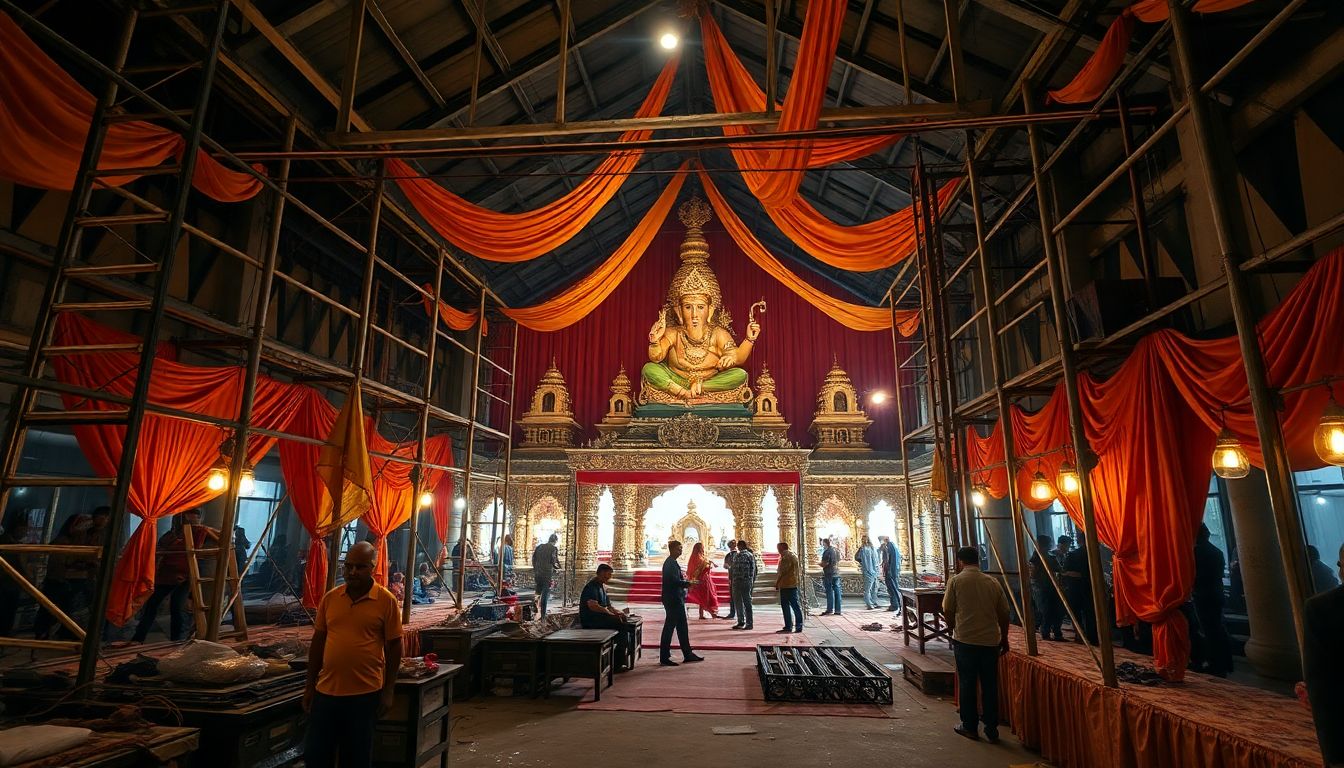
The Lalbaug Sarvajanik Utsav Mandal at Ganesh Gully in Parel unveiled its theme for the upcoming Ganesh festival on Friday, announcing that it will showcase Maharashtra’s saint tradition under the concept ‘Vaishnavanchi Wari’. The mandal, which is popularly known for hosting ‘Mumbai Cha Raja’, is preparing to mark its 99th annual Ganeshotsav celebration.
The area of Parel and the wider Girangaon belt, historically recognized as the ‘land of looms’, was once a stronghold of textile mill workers and remains home to several prominent Ganpati pandals, including Lalbaug Cha Raja. Ganesh Gully stands as one of the oldest and most popular pandals in the city.
This year's tableau focuses on the Warkari tradition rooted in the teachings of prominent saints, including Dnyaneshwar, Tukaram, and Eknath. The tradition emphasizes moral and austere living, public service, and devotion to Lord Vitthal, an incarnation of Lord Vishnu.
Explaining the choice behind this year's concept, Swapnil Parab, secretary of the Lalbaug Sarvajanik Utsav Mandal, stated that the organizers chose to feature the state's saint tradition to highlight its deep cultural impact. He noted that the saints have significantly influenced the social and religious traditions of Maharashtra through their lives and teachings.
The festival traces its history back to 1928, when it was established at Peru Chawl by local mill workers. The initiative was inspired by freedom movement leader Lokmanya Tilak, who envisioned public celebrations of Ganeshotsav as an effective platform to mobilize the public against colonial rule and build social unity.
In 1938, the celebration was shifted to Ganesh Galli. During the era of the freedom struggle, the mandal presented patriotic tableaux as part of the annual festivities to awaken public consciousness.
The mandal was officially registered in 1950. Following its registration, a broader range of cultural activities became integrated into the annual festivities, including theatre, music, lecture series, and traditional folk arts.