Heavy rain uproots 103 trees across Panvel and Kharghar damaging 15 vehicles
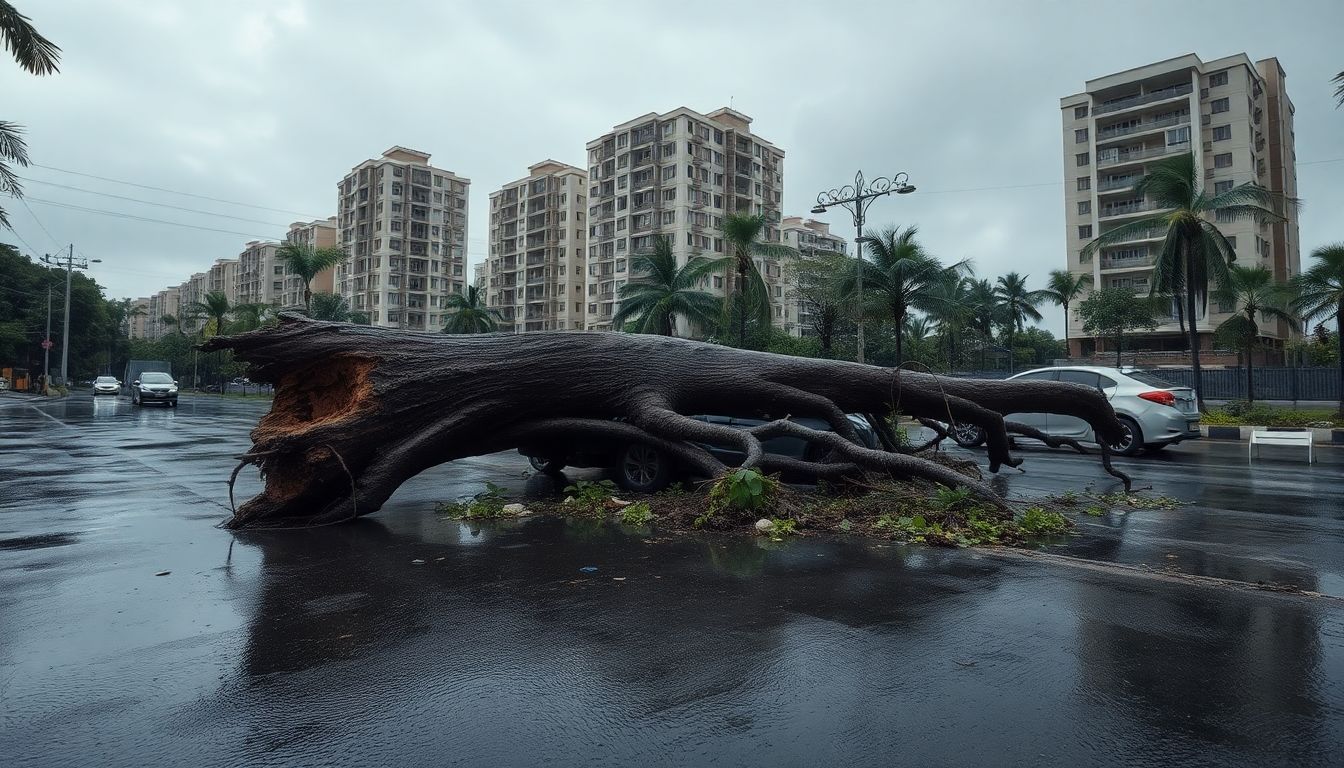
Over a period of three days, continuous heavy rainfall uprooted 103 trees across the Panvel Municipal Corporation (PMC) limits in Navi Mumbai, specifically affecting Kharghar, Taloja, Navade, Panvel, New Panvel, Khanda Colony, Kalamboli, and Kamothe. The tree falls damaged 11 two-wheelers and four cars, disrupted traffic, and sparked public concern regarding the planting depth of trees in areas developed by the City and Industrial Development Corporation (CIDCO).
The PMC recorded over 420 mm of rainfall during the three-day period. The worst-affected areas were the CIDCO-developed nodes of Kharghar, Taloja, and Navade, which collectively accounted for 59 of the uprooted trees.
According to PMC data, another 25 trees fell in Panvel, New Panvel, and Khanda Colony. Meanwhile, Kalamboli recorded 11 uprooted trees, and Kamothe reported eight.
While no casualties were reported, the falling trees damaged 15 parked vehicles, including 11 two-wheelers and four cars. The continuous heavy rainfall softened the soil, causing several large trees to detach from their roots and collapse onto roads, footpaths, and vehicles, which led to traffic disruptions across multiple areas.
Prior to the monsoon, the PMC had pruned 3,393 potentially hazardous trees as part of its preparedness measures. In response to the recent tree falls, the Tree Authority Department has been working to clear the debris, remove the fallen trees, and restore normal traffic movement.
PMC Deputy Commissioner Swarup Kharge appealed to local residents to report any dangerous or leaning trees to the administration so that immediate preventive action can be taken.
The incident has prompted criticism from local residents, who raised concerns over the quality of tree plantations carried out in the CIDCO-developed nodes. Residents alleged that many of the uprooted trees had not been planted at a sufficient depth, leaving them highly vulnerable to collapsing during prolonged spells of heavy rain.