MPCB Clears Deonar Biomining Project to Treat 15,000 Tonnes of Waste Daily
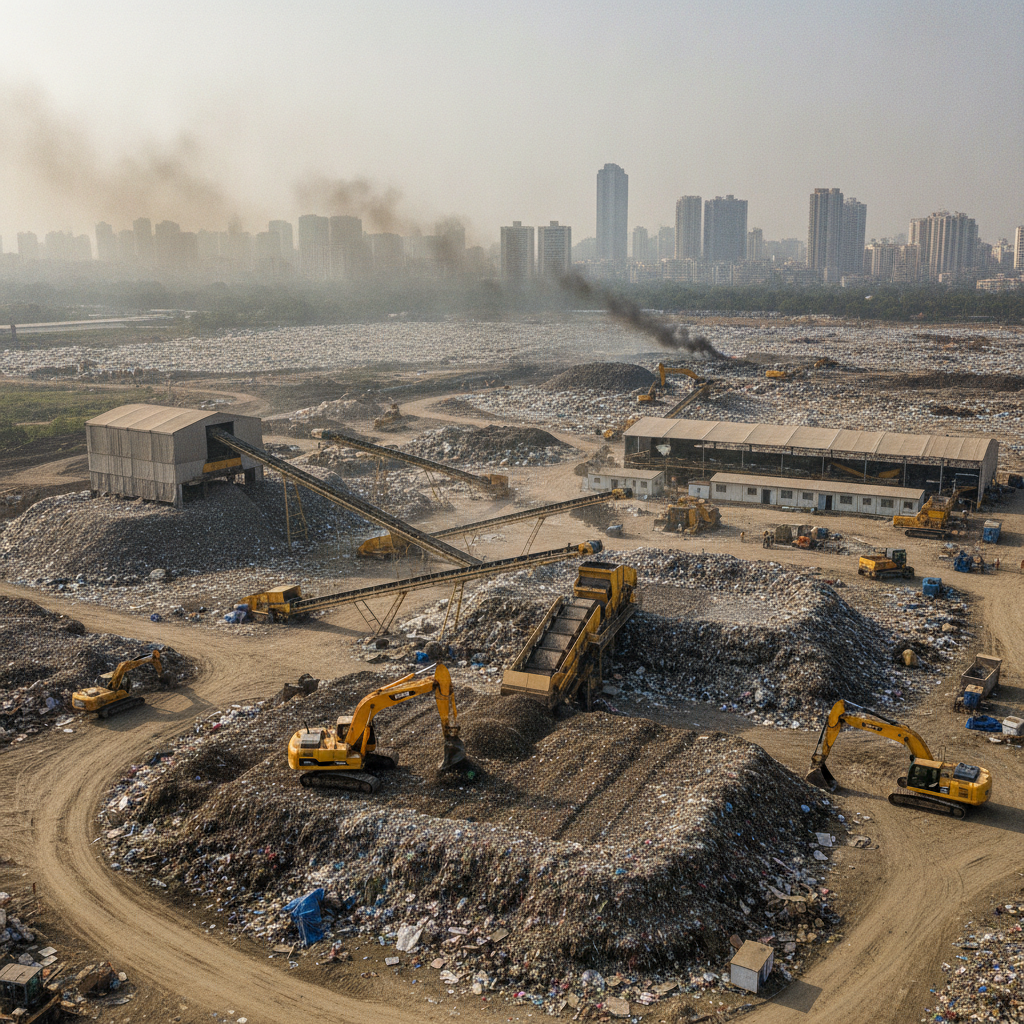
The Maharashtra Pollution Control Board has granted a Consent to Operate (Part) for a massive legacy-waste biomining project at Deonar in Mumbai on August 21. The regulatory clearance permits biomining operations at a designated capacity of 15,000 metric tonnes per day to scientifically process approximately 18.5 million tonnes (185 lakh tonnes) of accumulated legacy waste.
The primary objective of the large-scale biomining initiative is to clear the long-standing waste mounds and reclaim approximately 110 hectares of land at the Deonar site. The scale of the legacy waste processing comes in the context of Mumbai generating roughly 7,000 metric tonnes of fresh solid waste on a daily basis.
Under the biomining process, the accumulated legacy waste will be systematically excavated, sieved, and segregated into different useful categories and residual fractions. These separated components include Refuse Derived Fuel (RDF), finished compost, recyclable materials, and rejected or residual waste.
According to the project parameters, all recovered recyclables, including plastic, glass, metals, rags, and cloth, will be channelled directly to authorised recycling facilities. Non-recyclable plastic fractions that meet technical suitability criteria will be repurposed for road construction, supplied to RDF units, or sent for co-processing in cement plants.
The initiative also aims to recover other material fractions wherever technically suitable to ensure optimal resource efficiency. Fine earthy material and soil-like fractions obtained from the biomining separation are slated for use in landscaping, public gardening projects, road medians, and the development of urban green belts.
Similarly, heavier mineral fractions such as suitable sand, gravel, stones, and concrete fragments will be recovered and reused in road works and related construction applications. The overall processing framework focuses on maximising material recovery and beneficial reuse to significantly reduce waste volume, ensuring that only inert and unusable residual material is sent to a scientific sanitary landfill for final disposal.