MRVC Studies Suburban Rail Expansion to NAINA and Panvel-Uran Belt Up to 2047
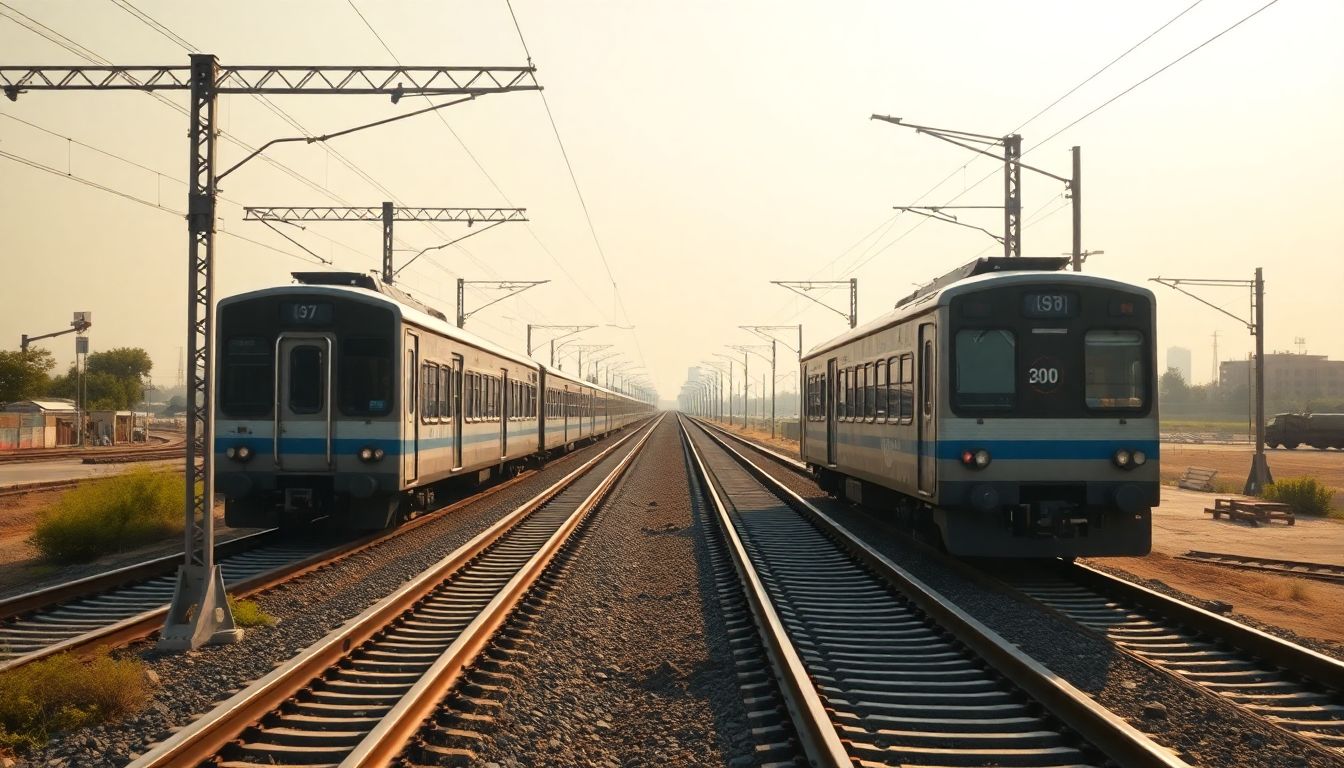
The Mumbai Railway Vikas Corporation (MRVC) is undertaking a comprehensive planning study to assess the expansion of the city's suburban rail network into emerging growth hubs, including NAINA and the Panvel-Uran belt. The assessment, part of the MUTP-IV planning process, will look beyond the existing railway footprint to identify new corridors, capacity upgrades, and major safety interventions across Mumbai through the year 2047.
Suburban rail passenger demand will be mapped across four benchmark years: 2030, 2035, 2040, and 2047. By evaluating projected passenger traffic and urban growth patterns, the study aims to establish where additional track capacity and network extensions will be required across the metropolitan region over the next two decades.
A primary focus of the exercise is addressing the future mobility needs of the Navi Mumbai Airport Influence Notified Area (NAINA), the planned development zone surrounding the upcoming Navi Mumbai International Airport. The assessment is also examining the projected rail travel demand for Mumbai 3.0, also known as the Karmala-Sai-Chirner (KSC) New Town in the Panvel-Uran belt, to determine whether new corridors or extensions of existing lines are viable.
To address systemic congestion on existing tracks, the study will examine the feasibility of laying additional railway lines. These extra tracks would segregate suburban services from mainline long-distance trains, as well as separate fast and slow suburban corridors to enhance overall operational capacity and frequency.
The planning framework also focuses on station infrastructure and fleet modernisation. The study will pinpoint platforms across the suburban network that require lengthening to accommodate 15-car trains, while also evaluating the construction of new rail terminals at high-demand stations.
Rolling stock requirements form another major component of the review. MRVC will evaluate the need for additional air-conditioned Electric Multiple Units (EMUs), the optimisation of 12-car and 15-car services, and the feasibility of eventually transitioning to an all-AC suburban train fleet.
In terms of commuter safety, the study will review upgrades to modern signalling and advanced train-protection infrastructure across the network, including the implementation of Kavach 5.0 to create a higher-capacity and safer transit system.