Mumbai Experts Highlight Privacy Risks As Millions Confess Deepest Secrets To AI

In Mumbai, millions of individuals are increasingly choosing to share intensely personal information, secrets, and anxieties with Artificial Intelligence (AI) rather than other humans. This shift has resulted in an explosion of highly sensitive medical, financial, and emotional data being handed over to AI systems, raising significant privacy concerns regarding what corporations know and how they will use this data.
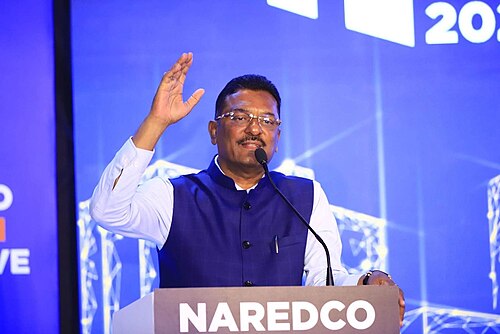
Ajai Chowdhry, a Padma Bhushan awardee who co-founded HCL and currently chairs India's National Quantum Mission, explained that this trend is driven by economic factors. Chowdhry observed that people are treating AI similarly to how they once treated Google, viewing it as an inexpensive digital service that answers questions and solves problems.
To illustrate how quickly cheap technology is consumed, Chowdhry pointed to Uber, where employees exhausted an entire year’s AI token allocation in just three months. He noted that when technology is cheap, people tend to consume it recklessly without considering the eventual cost.
However, the willingness to share deep secrets goes beyond economics. Biju Dominic, of Fractal Analytics and author of "Microstimuli," stated that people do not open up to AI because they believe the algorithms are intelligent, but rather because they believe they will not be judged.
Dominic highlighted this behavior through research his firm conducted for a large private-sector bank. The bank assumed defaulted borrowers were avoiding calls because they did not plan to repay. However, Dominic's team found that defaulters wanted to repay but avoided calls because they felt shame and feared being judged by human call center executives.
When the bank replaced part of the interaction with a non-human interface to remind borrowers of their repayment schedule, collections improved by nearly 20 percent. Dominic explained that AI's greatest advantage is not its intelligence, but its complete absence of judgment.
Despite the comfort of a non-judgmental listener, experts warn of the risks. Unlike a priest or a therapist, AI machines belong to corporations. The rules governing these interactions are written in corporate terms of service, which few users read or understand, leaving the future use of this highly personal data an open question.