Mumbai Police Struggle to Trace Hoax Bomb Threats Targeting High-Profile Landmarks
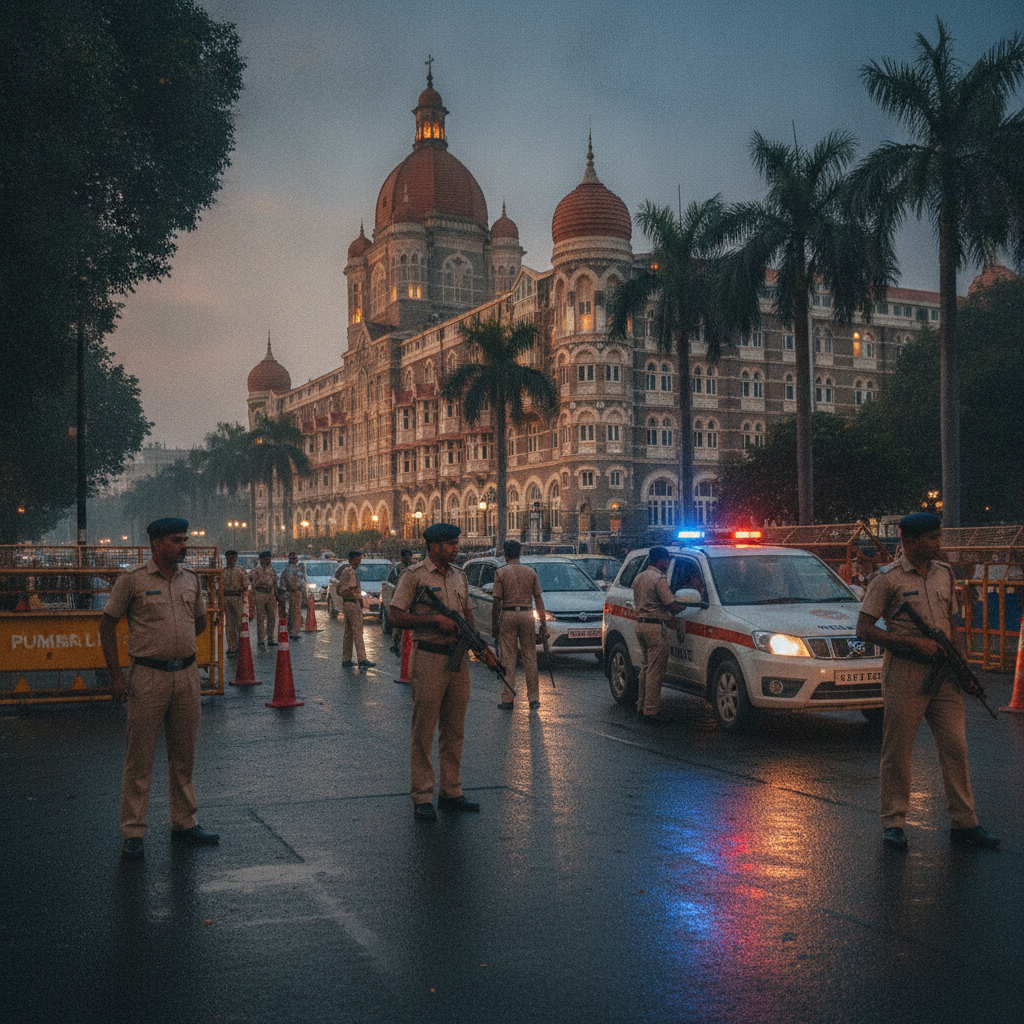
Mumbai Police are facing a major challenge as a rising wave of fake bomb threats and hoax messages targets high-profile locations across the city, including the Taj Mahal Palace Hotel, the Trident Hotel, and the Mumbai Press Club. The surge in threats over the past three years has consumed significant police manpower, time, and resources, forcing security agencies to conduct exhaustive multi-hour searches.
According to police records, the number of hoax threats in Mumbai has steadily increased. The city received 20 fake bomb threats in 2024, which rose to 25 in 2025. The 2025 threats included 12 phone calls, nine emails, and four social media messages. The trend has continued into 2026, with the police control room receiving 15 bomb hoax messages—10 via email and five via phone calls—in the first six months of the year alone.
The hoaxes have targeted critical infrastructure and landmark institutions, including Vidhan Bhavan, Mumbai Airport, the Mumbai Mayor’s Office, the Bombay Stock Exchange, the RSS office, Tata Memorial Hospital, local railway stations, schools, and Kila Court. Each threat triggers immediate deployment of bomb detection and disposal squads, dog squads, and local police officers to carry out thorough searches.
In one specific case, investigators have spent more than two months attempting to trace a bomb threat email sent to the Mumbai Press Club on March 19. Police sources revealed that the email originated from a Proton Mail account and was routed through a Germany-based Virtual Private Network (VPN), leaving investigators currently unable to identify the sender.
Cyber investigators face severe technical hurdles when tracking these threats, as perpetrators increasingly rely on encrypted email services, VPNs, and other anonymity tools to hide their identities. To track suspects, police analyze IP logs, internet service provider records, and digital forensic evidence. Officials noted that even a brief disconnection from a VPN can expose a sender's real IP address.
For threats involving overseas servers, Mumbai police seek assistance from central agencies and Interpol through the Ministry of Home Affairs. However, investigations are frequently delayed because several foreign service providers decline to share user data. For threats made over phone calls, investigators rely on call detail records, IMEI tracking, and voice analysis to gather evidence.
While several suspects were arrested last year—with investigations finding some were mentally unstable and others acted under the influence of alcohol—the police maintain that every single threat is treated as genuine to ensure public safety.