Mumbai Records Third-Lowest August Rainfall in 10 Years
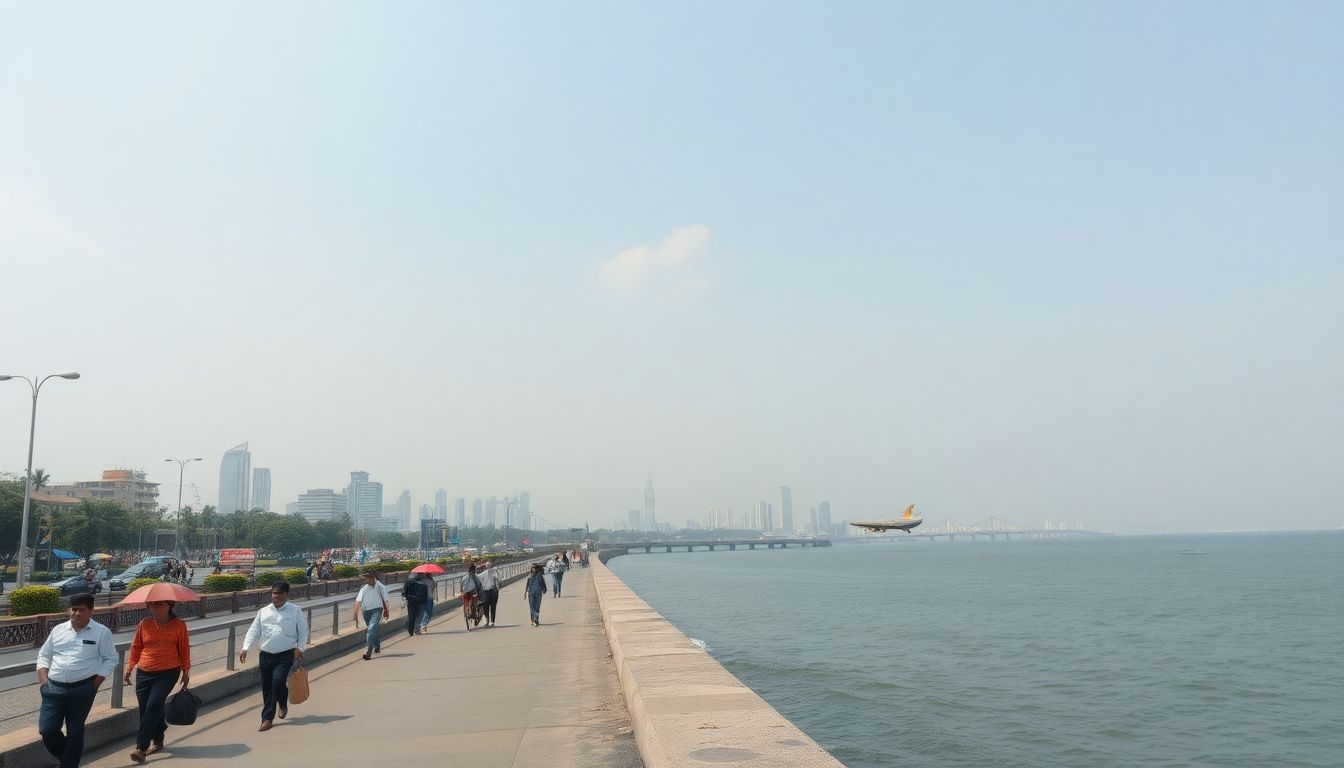
Mumbai recorded its third-lowest August rainfall in a decade, experiencing an unusually subdued month following its fourth-wettest July in nearly ten years, according to data from the India Meteorological Department's observatories in Santacruz and Colaba.
The IMD benchmark Santacruz observatory recorded 315.3 mm of rainfall between August 1 and August 30, significantly below its normal August average of 566.4 mm. Over the past 10 years, only two Augusts have seen lower figures at Santacruz: 177.2 mm in 2023 and 235.2 mm in 2018.
A similar deficit was recorded in south Mumbai. The Colaba observatory logged 164.4 mm during the same period, against its monthly normal of 482.1 mm. This marked the third-lowest August total in a decade for Colaba, trailing only August 2023 with 111.5 mm and August 2018 with 188.7 mm.
The subdued August marks a sharp contrast to July, when Colaba recorded 1,176.5 mm and Santacruz received 1,491.9 mm. Unlike the preceding months, which brought several intense spells of rain, August passed across Mumbai without any major heavy-rainfall episodes.
Despite the dry spell, the city faces little immediate concern regarding its water supply. The lakes supplying Mumbai are currently holding around 96% of their total useful water stock. Meanwhile, the Brihanmumbai Municipal Corporation has continued with its existing 10% water cut.
Overall seasonal rainfall across the city remains steady. Santacruz has recorded 2,223.6 mm so far this monsoon, close to its normal seasonal benchmark of 2,318.8 mm. Colaba has received 1,782 mm to date, compared to its seasonal normal of 2,094.6 mm.
Weather enthusiasts pointed to broader atmospheric conditions for the dry month. Athreya Shetty noted that frequent incursions of dry air from Central Asia, along with strong El Nino conditions and Madden-Julian Oscillation suppression, prevented Bay of Bengal weather systems from advancing to the west coast, leaving the Arabian Sea largely dormant.
Abhijit Modak explained that while July saw monsoon systems propagate westward and strengthen flow over Maharashtra, August systems struggled to advance due to persistent dry-air intrusion from the northwest and the adjoining Middle East region.