MUML Transmission Project Goes Operational, Boosting Thane and Mumbai Grid by 2,000 MW
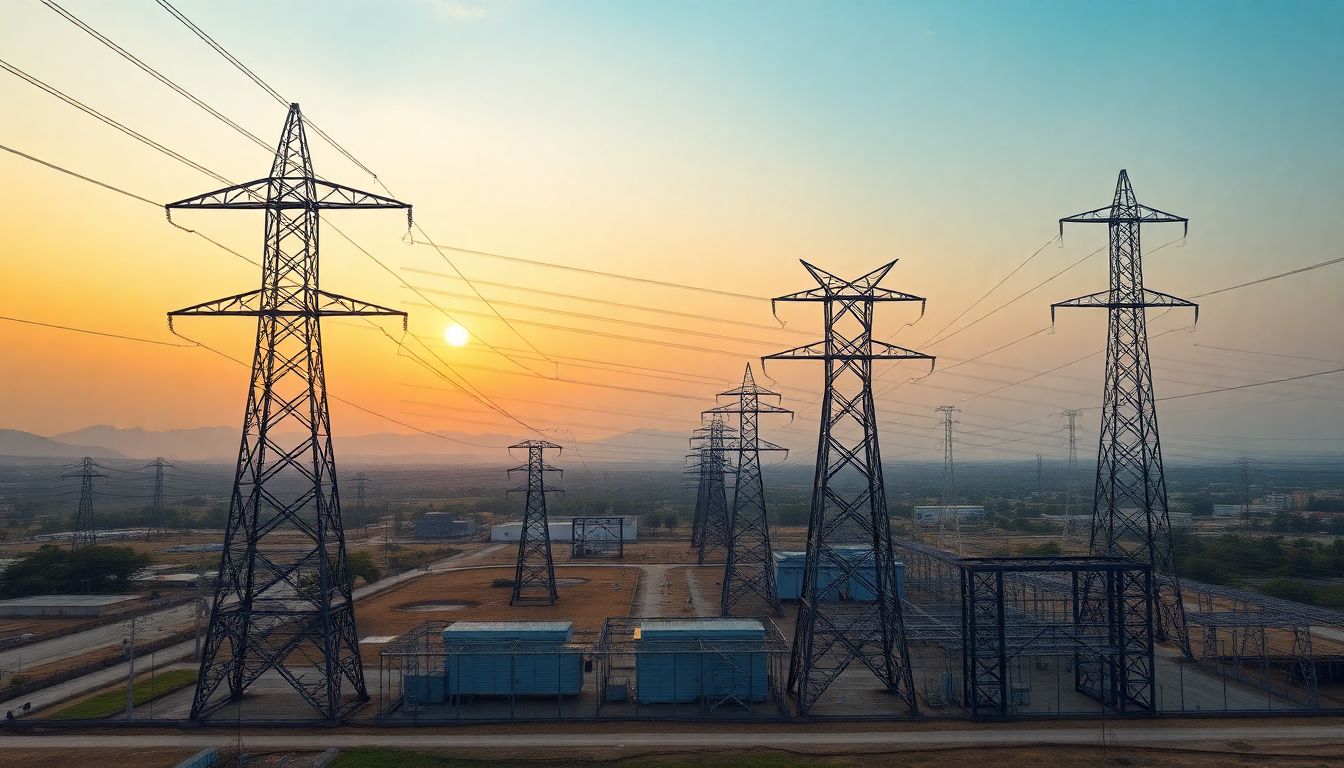
The Mumbai Urja Marg Ltd (MUML) transmission project has officially gone operational, establishing a new high-capacity transmission corridor that traverses Thane, Navi Mumbai, Bhiwandi, Kalyan, Ambernath, and Panvel. The newly active corridor successfully integrates a dormant 400/220-kV Navi Mumbai GIS substation with the national grid, immediately boosting the region's electricity import capacity by over 2,000 MW to address rising power demands.
The project's activation resolves a nearly 12-year execution deadlock, overcoming complex right-of-way challenges involving multiple government agencies and local stakeholders. By operationalising the Navi Mumbai GIS substation, which had remained dormant since 2012, the project establishes an additional entry point for electricity into Mumbai. This integration is expected to ease pressure on heavily loaded substations in Kalwa and Kharghar, significantly reducing the risk of transmission bottlenecks.
Spanning approximately 100 kilometres, the transmission corridor was constructed through some of the most difficult terrain in the Mumbai Metropolitan Region. To navigate dense urban settlements, highways, railway lines, metro corridors, forests, and rocky hills, developers utilised specialized engineering techniques.
Instead of using conventional lattice towers that require large footprints, the project deployed ultra-narrow-base towers and monopoles designed to fit within narrow road margins. In the forested stretches around Haji Malang and Raigad, developers used helicopter-assisted stringing to transport equipment and lay conductors, minimizing ecological disturbance and avoiding heavy machinery.
Developed under a tariff-based competitive bidding framework on a Build-Own-Operate-Maintain model, the project represents an estimated investment of USD 300 million to USD 400 million.
The enhanced capacity is designed to secure the region's power supply as it faces growing demand from major infrastructure projects, including the Navi Mumbai International Airport, expanding Metro lines, high-speed rail, and data centres. Additionally, the network is expected to facilitate larger inflows of renewable energy from western states like Gujarat and Rajasthan, reducing reliance on local fossil-fuel-based power generation.