Polluted Creek Water Threatens DPS Flamingo Lake in Navi Mumbai
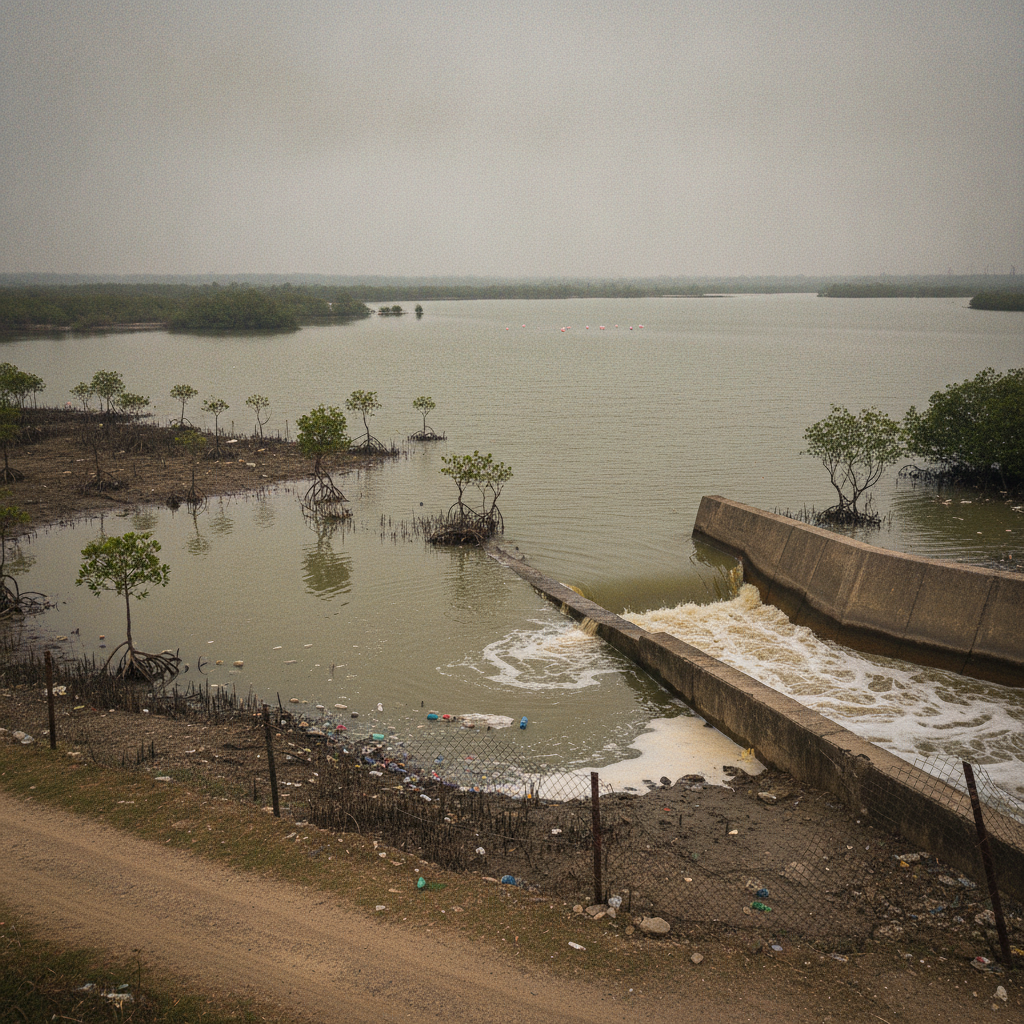
Recent water quality tests at DPS Flamingo Lake in Navi Mumbai have revealed alarming levels of pollution entering the wetland from a tidal inflow channel, threatening the local ecosystem and causing a sharp decline in flamingo sightings. The testing, commissioned by the Navi Mumbai Environment Preservation Society and the NatConnect Foundation, showed that the highly contaminated water is putting this crucial part of the Ramsar-listed Thane Creek Flamingo Sanctuary ecosystem at risk.
The latest test results indicated that Total Dissolved Solids (TDS) in the lake reached 19,600 mg/l. Under the IS 2490:1974 inland surface water standards, the permissible limit for TDS is 2,100 mg/l, meaning the recorded levels are more than nine times the legal threshold.
According to B.N. Kumar, the director of the NatConnect Foundation, the combination of polluted tidal inflows and extensive blue-green algal mats has pushed DPS Flamingo Lake toward an ecological tipping point. Kumar urged the government to expedite a final Government Resolution to grant Conservation Reserve status to the lake to ensure stronger legal protections.
These findings reinforce a pattern of deteriorating water quality detected in earlier tests. In March, a sample collected from the lake recorded an even higher TDS level of 21,720 mg/l. A subsequent sample taken in April from a drain discharging into the wetland showed TDS levels of 7,950 mg/l. The April sample also revealed a Biochemical Oxygen Demand (BOD) of 36.4 mg/l, which exceeds permissible inland water limits. All three tested samples failed to meet standard inland water quality guidelines.
Sandeep Sareen, a representative of the Navi Mumbai Environment Preservation Society, explained that while flamingos can tolerate natural salinity, they cannot thrive in waters contaminated with sewage, urban runoff, and other pollutants. Sareen noted that the poor water quality is steadily eroding the lake’s ecological balance and shrinking the birds' food base.
Flamingos are highly vulnerable to these environmental changes because they rely on specific water chemistry and salinity levels to sustain the algae, diatoms, and microscopic invertebrates that make up their diet. The diminishing presence of the birds at DPS Flamingo Lake serves as an early warning that the fragile wetland is under growing stress.