Race For Taller Ganesh Idols Raises Safety Concerns Across Mumbai And Borivali
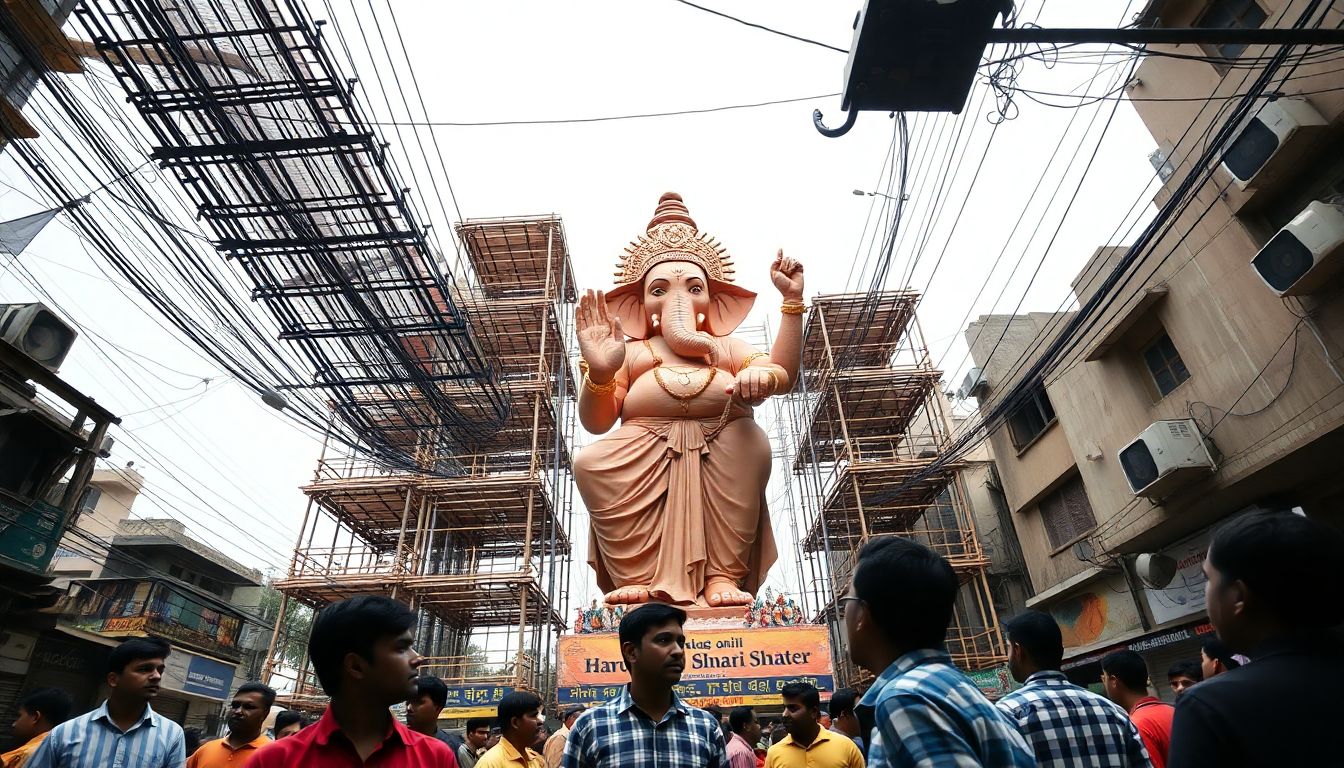
A deadly idol collapse during an arrival procession in Bhuleshwar on August 22, which killed two people and injured five others, has cast a spotlight on the intensifying competition among Ganesh mandals in Mumbai and its suburbs, including Borivali, to build increasingly tall idols.
The drive to install towering idols has gained significant momentum across the city. In the western suburbs, mandals began scaling up to provide devotees with an experience comparable to major pandals in South Mumbai. Sameer Bambardekar, a member of the Upnagar Cha Raja Sarvajanik Ganeshotsav Mandal in Borivali, noted that his mandal increased its idol from eight feet to 25 feet in 2006 for its 25th anniversary. The trend was soon adopted by several mandals across Borivali, Kandivali, Dahisar, and Bhayander to draw local crowds who would otherwise travel hours to South Mumbai.
Across Mumbai, the heights continue to escalate. Malvani Mhada Cha Raja grew from 22 feet in 2022 to 36 feet last year, while Khetwadi’s 11th Lane produced a 45-foot idol in 2023 and is preparing a 47-foot idol this year. Mandals trace this growth to inter-mandal competition, internal politics, and the commercial demand to attract crowds and secure corporate sponsorships among the city's 2,500 to 3,000 registered pandals.
However, the growing heights present severe safety and logistical challenges. Sculptor Rajan Zard noted that while idols up to 15 feet are safest and those up to 20 feet can be managed with proper support, commercial pressures push mandals to demand larger statues. Larger idols also carry steep costs, rising from around Rs 3.5 lakh for a 10-to-15-foot idol to Rs 12-13 lakh for a 40-to-45-foot structure.
Umesh Sitaram Naik, a committee member of the Chinchpokli Sarvajanik Utsav Mandal, warned that moving, transporting, and immersing massive idols poses distinct risks requiring immense technical expertise from sculptors.
Despite the escalating scale and associated hazards, the Brihanmumbai Municipal Corporation (BMC) enforces no height restrictions on idols, nor does it inspect their structural integrity. Prashant Sapkale, BMC deputy municipal commissioner for zone II, confirmed that no BMC team oversees or certifies the structural stability of idols, leaving safety measures entirely to individual sculptors.
While previous attempts to regulate heights—such as an 18-foot limit proposed after a 2011 collapse and temporary four-foot caps during the COVID-19 pandemic—were introduced, no permanent standards remain in effect.