Bombay High Court Allows Podium Recreational Spaces in Navi Mumbai Redevelopment
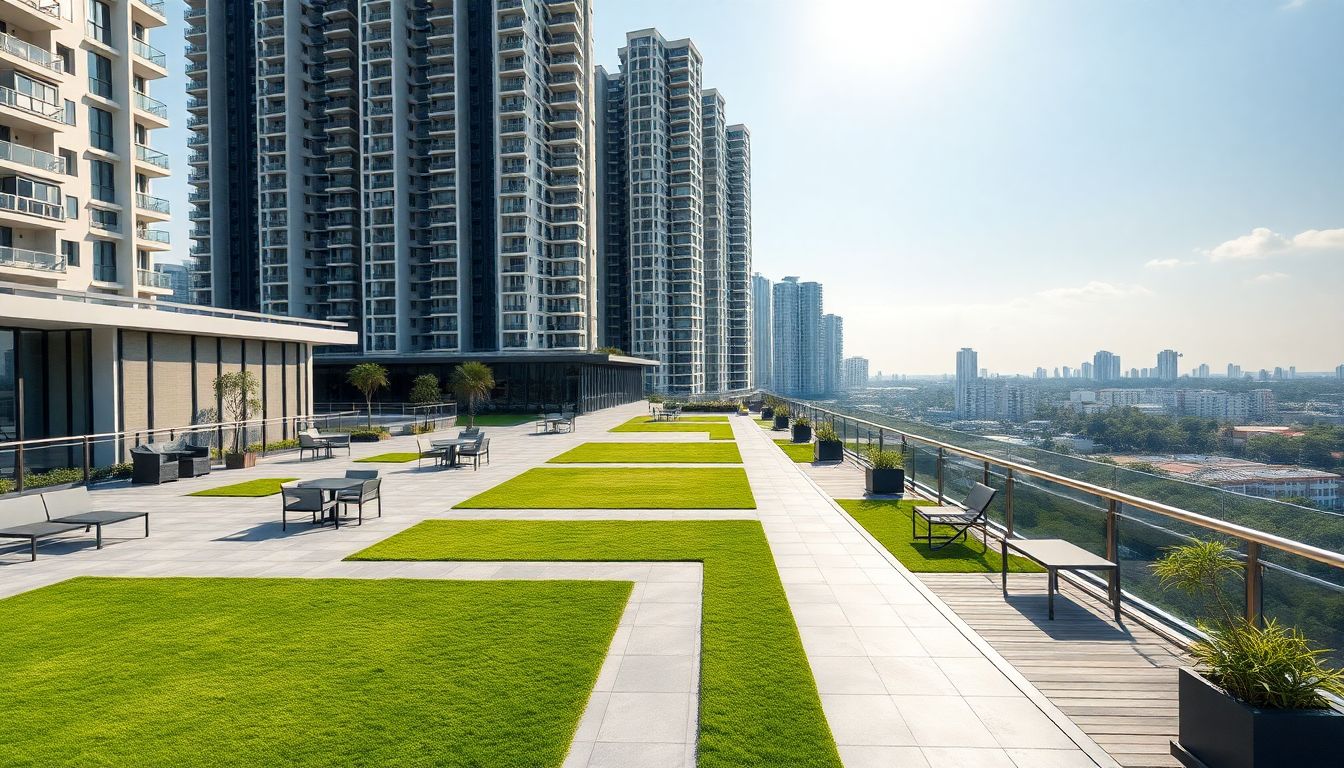
The Bombay High Court ruled on October 1, 2026, that recreational open spaces in certain redevelopment projects in Navi Mumbai can be situated on podium levels instead of ground level, provided they remain completely open to the sky. A bench of Justices Ajey Gadkari and Kamal Khata issued the order while dismissing a public interest litigation that challenged town planning relaxations.
The PIL, filed by Navi Mumbai resident Sandeep Thakur, questioned concessions granted by the Navi Mumbai Municipal Corporation to five housing societies. Thakur argued that mandatory recreational open spaces ought to be retained at ground level for occupants, contending that shifting them to podium levels would compel residents to visit public neighbourhood spaces, thereby increasing footfall and overcrowding civic facilities.
Rejecting the challenge, the bench held that the petitioner failed to demonstrate that the civic body acted arbitrarily or that the permissions violated the Unified Development Control and Promotion Regulations. The court stated that the UDCPR permits recreational open space to be located on podiums in suitable circumstances, noting that 100 percent of such space can be situated on a podium level as long as it remains entirely open to the sky.
The judges observed that the UDCPR contains no statutory requirement mandating that recreational open spaces must be positioned on natural ground, virgin soil, mother earth, or an at-grade location. The bench stated that it could not read unwritten conditions into the regulations when they were not expressly stipulated by the planning framework.
The high court also affirmed the NMMC's authority to grant relaxations on a case-to-case basis under Regulation 2.4 of the UDCPR. The five housing societies had cited multiple planning constraints to justify their proposals, including mandatory parking requirements, road setbacks, building height limits, and rehabilitation obligations. The court noted that the petitioner produced no material showing that these constraints were fabricated or false.
Addressing the claim that elevated podium spaces would crowd public parks, the bench found no factual evidence to back the assertion, describing the petitioner's narrative as a bare assertion without substantiation. The court added that Navi Mumbai-specific provisions do not override general UDCPR rules, which continue to apply where no direct conflict exists.
While upholding the civic approvals, the bench emphasised that local planning authorities must ensure transparency in their administrative decisions. The court remarked that state authorities cannot play hide and seek with the public, recommending greater citizen participation and structured mechanisms for residents to raise town planning concerns.