Bombay High Court Blames Citizen Encroachments For Mumbai Waterlogging
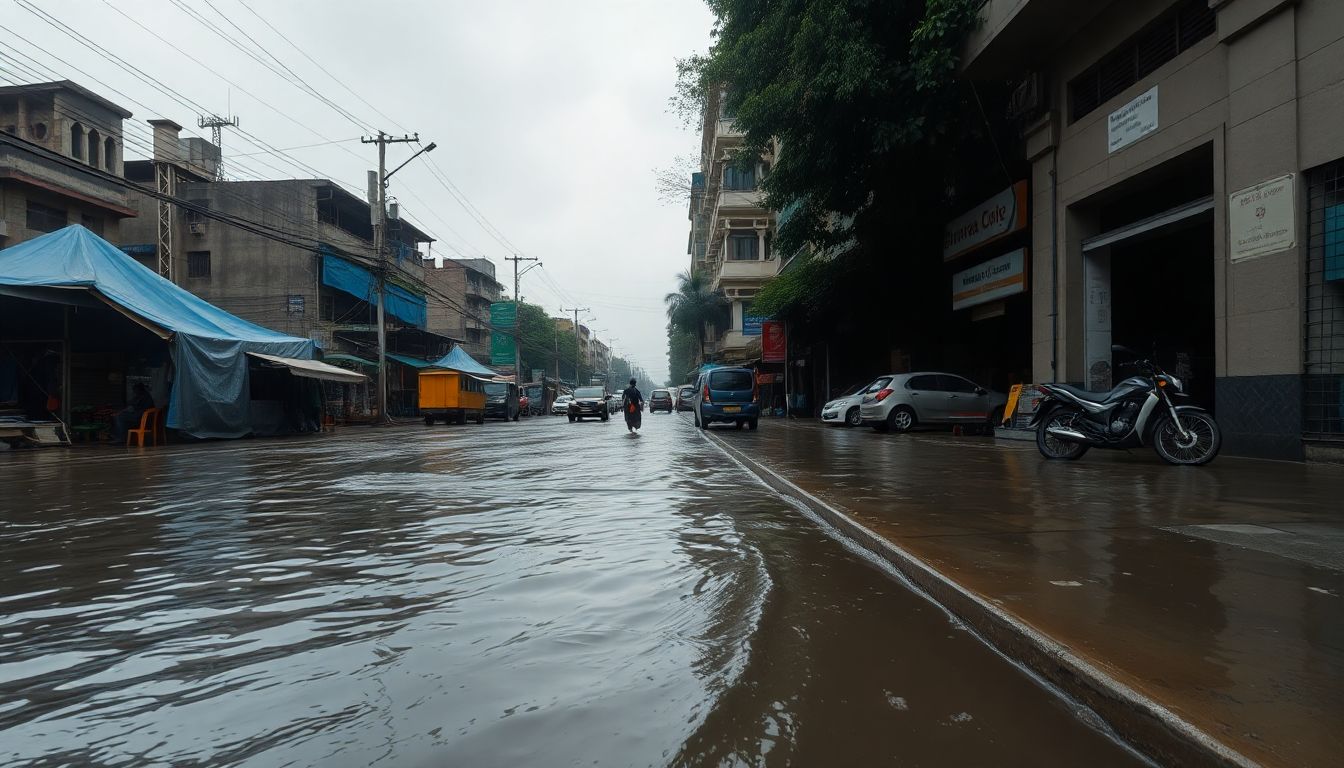
The Bombay High Court recently observed that Mumbai's recurring monsoon waterlogging is "our own creation," pointing to citizens encroaching on public land and blocking drains. The court highlighted how residents, businesses, and hawkers have converted footpaths into shops and parking spaces, severely obstructing the city's stormwater drainage network.
The court’s observations draw attention to a long-standing structural crisis in Mumbai. Originally designed by British engineers in the late 19th and early 20th centuries, the city's gravity-based drainage system of underground drains and outfalls was built to handle rainfall of only 25 mm per hour. While adequate for the population density of that era, the system is entirely unable to cope with the modern city's concrete surfaces, high population density, and extreme weather events.
Post-independence growth rapidly outpaced drainage upgrades. Despite studies following major floods in 1974 and 1985 flagging siltation, lack of maintenance, and encroachments, progress remained slow. The 1993 BRIMSTOWAD report recommended doubling the drainage capacity to 50 mm per hour, but implementation was piecemeal. It was only after the devastating deluge of July 26, 2005—which dumped 944 mm of rain in a single day—that the BRIMSTOWAD project was revived.
Even today, after the completion of several pumping stations over the last two decades, the drainage network's effective capacity only hovers around 55 mm per hour in upgraded stretches.
According to the court, the problem is compounded by public behavior. Drains are regularly used as dumping grounds, and stormwater channels have been progressively narrowed by encroachments.
In response to the ongoing threat of flooding, the Maharashtra state government recently submitted a Rs 13,000-crore integrated flood mitigation proposal to the Central government. The proposal targets nearly 370 flood-prone locations across Mumbai with the goal of clearing floodwater within 30 minutes, even during high tides. The state has also committed to completing the remaining BRIMSTOWAD works within the next two years.