Bombay High Court Questions If Politically Dominant Marathas Can Get Quota
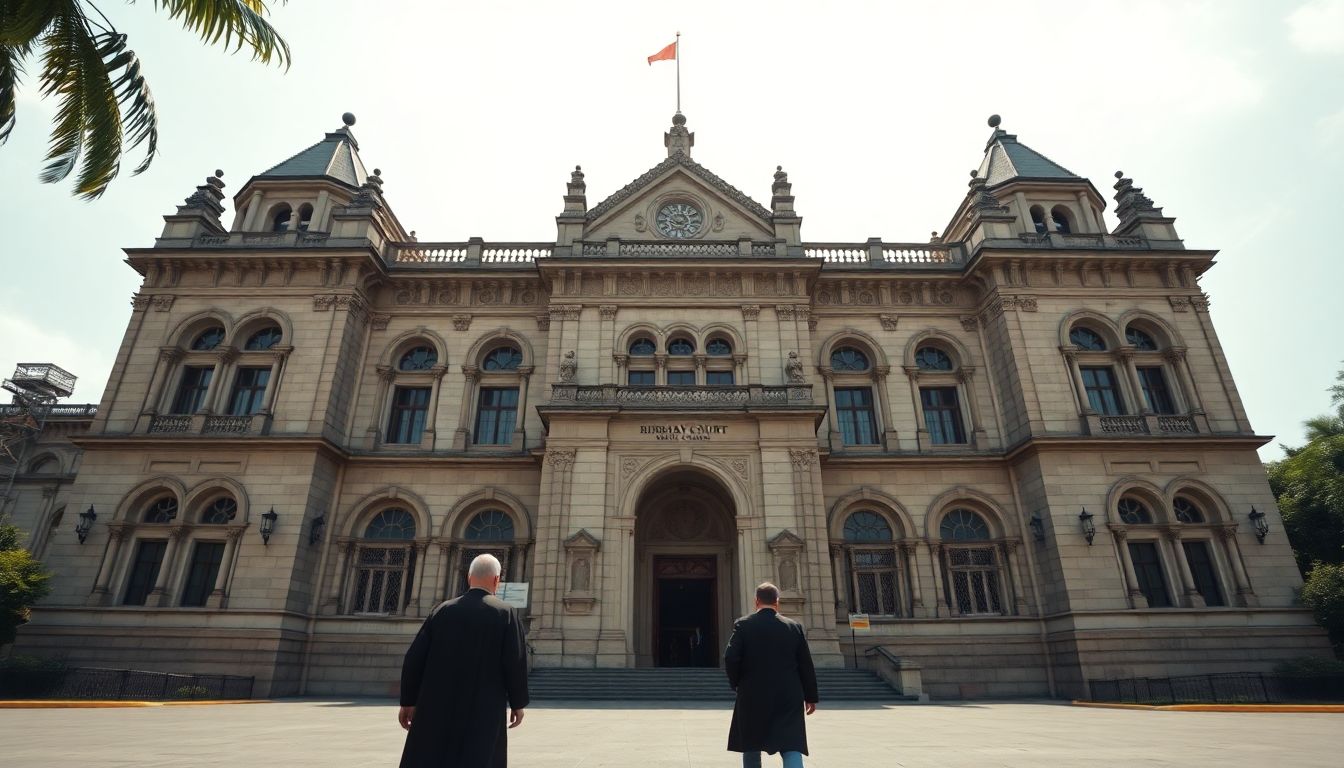
The Bombay High Court is examining the constitutional validity of the Maharashtra State Reservation for Socially and Educationally Backward Classes (SEBC) Act, 2024. The law, passed by the state legislature, grants a 10 percent reservation to the Maratha community in educational institutions and government jobs.
A three-judge bench comprising Acting Chief Justice Ravindra V Ghuge, Justice NJ Jamadar, and Justice Sandeep V Marne is hearing a batch of public interest litigations and writ petitions challenging the new law. The court's decision will determine whether the politically influential Maratha community can legally receive these reservation benefits.
During the hearings, the bench questioned whether the Maratha community can be considered "out of the mainstream of national life," which is a necessary factor to justify breaching the 50 percent reservation ceiling. Justice Jamadar pointed out that historical data showed nearly 150 out of 288 MLAs in the state assembly belonged to the Maratha community. He questioned how a community with such strong legislative and ministerial representation could be classified as being outside the mainstream.
Representing the state government, Advocate General Milind Sathe argued that the political prominence of a few individuals cannot determine the backwardness of an entire community. He stated that the test for backwardness must apply to the larger segment of the society, and noted that successful individuals would be excluded from the quota through the "creamy layer" concept. Sathe drew a comparison to Scheduled Castes and Scheduled Tribes, where individuals have reached top political offices without altering the backward status of their broader communities.
Petitioners challenging the 2024 law argue that the addition of the 10 percent Maratha quota, alongside the 10 percent Economically Weaker Section (EWS) quota, pushes Maharashtra's total reservation to 72 percent.
This is the state's third attempt to implement a Maratha quota. A 2014 ordinance was stayed by the High Court, and a subsequent 2018 law was struck down by the Supreme Court in 2021. In the 2021 ruling, the Supreme Court stated that the Marathas were a dominant forward class and that the state had failed to establish extraordinary circumstances to exceed the 50 percent limit.
In March 2024, the Bombay High Court ordered that all job advertisements and admission applications utilizing the new quota benefits will be subject to the final outcome of the ongoing court proceedings.