Bombay High Court restores producer Sunil Darshan's appeal against actor Sunny Deol
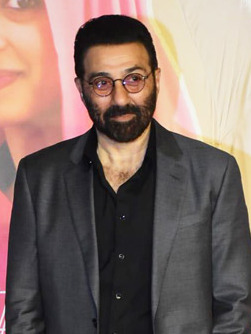
The Bombay High Court has restored producer Sunil Darshan’s appeal against actor Sunny Deol in a long-running dispute over the shelved film 'Good Morning India'. The decision on Thursday revives Darshan's challenge to a 2015 court order that upheld a 2011 arbitral award.
The legal battle, which began in 2008, was previously dismissed by a division bench of Justices AS Gadkari and Kamal Khata on June 9 for non-prosecution after no one appeared on behalf of Darshan on several occasions. The producer subsequently filed an interim application seeking the restoration of his appeal, which the court allowed on Thursday.
The dispute dates back to 2008 when Deol agreed to star in the film 'Good Morning India' and provide 40 shooting days. According to Darshan, the actor rejected the initial script, approved a revised version, but later failed to cooperate with the production before eventually exiting the project entirely.
Darshan claimed he had taken a loan of ₹3 crore to fund the film and sought ₹20 crore in damages. He alleged that he suffered heavy financial losses because of Deol’s failure to honour their agreement.
The dispute was initially referred to arbitration before a former Chief Justice of India. In June 2011, the arbitrator rejected Darshan’s ₹20-crore claim but directed Deol to pay ₹12 lakh.
Both parties challenged this arbitral award before the Bombay High Court. Darshan argued that his claim for damages was wrongly rejected despite the arbitrator finding Deol in breach of the agreement. Deol challenged the direction to pay the ₹12 lakh.
In April 2015, a single judge of the high court dismissed both petitions and upheld the arbitral award. The judge observed that while the producer showed the actor had committed breaches, he failed to substantiate the claim of consequent losses. The judge also held that the arbitrator was justified in imposing the ₹12 lakh cost on Deol due to the clear finding of a breach.
The parties then moved a division bench of the high court to challenge the 2015 order, leading to the current appeal that has now been restored.