Cumballa Hill Exhibition Unveils Jamshedpur History Through Parsi Family Archive
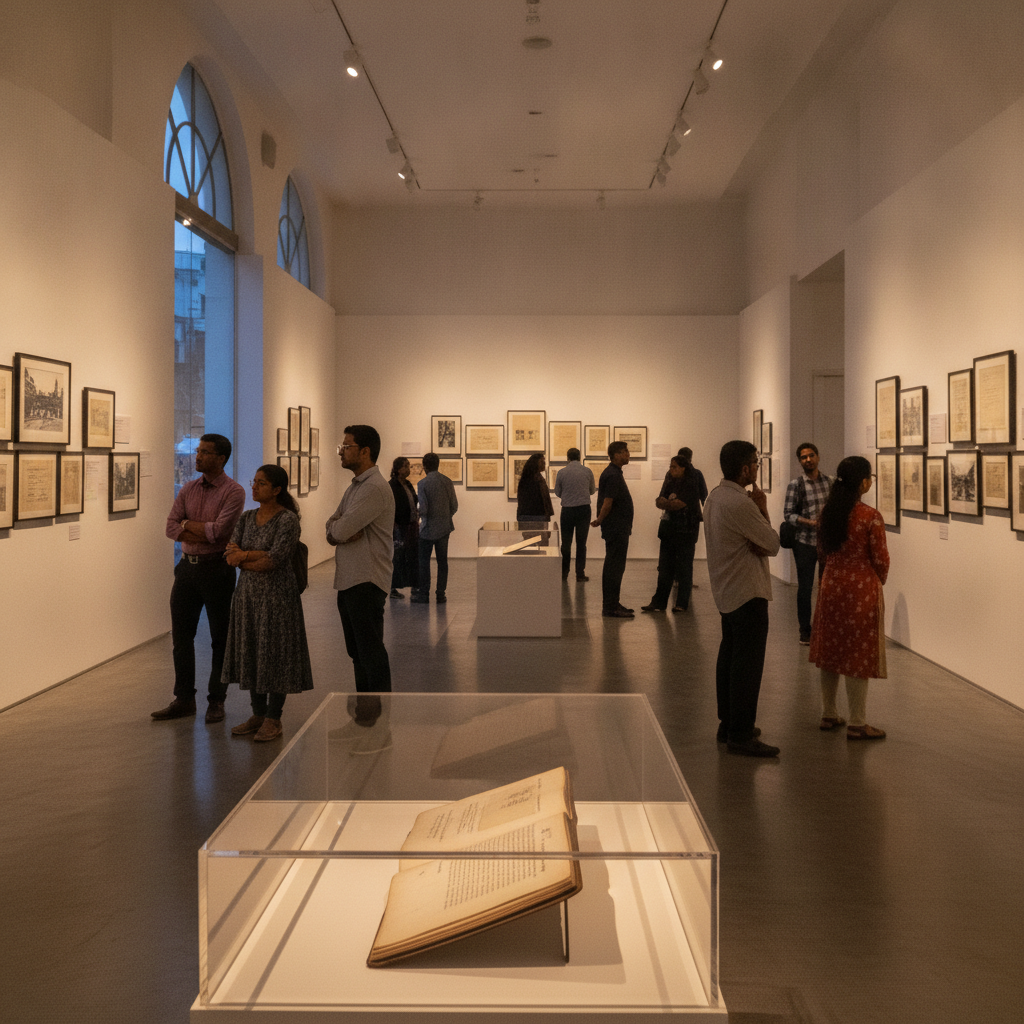
An exhibition showcasing a rare archive of the Parsi community's early history in Jamshedpur has opened at the Cymroza Art Gallery in Cumballa Hill, Mumbai. Titled "Sparseeing," the exhibition runs until June 20 and features more than 70 images, letters, and personal memorabilia recovered from a family attic.
The collection belongs to the Gazder-Bharucha family, who settled in Jamshedpur following the establishment of Tata Steel in 1907. The materials were discovered in a box of keepsakes at Regal Cafe in Jamshedpur by documentary photographer Abhishek Basu and researcher Joyona Medhi. The cafe is run by Varun Gazder, the grandson of Keki Gazder, who preserved the archive.
The family's history in Jamshedpur began with Khurshed Maneckji Bharucha, the first Indian chief cashier of Tata Steel. In 1935, Bharucha borrowed Rs 3.5 lakh from a friend who owned an island near Bombay to construct a four-storey building at Bistupur junction. Built with partition walls made of "surkhi"—a mix of burnt clay and limestone—the building was designed to house Parsi workers arriving from Bombay, Surat, Karachi, Birmingham, and Munich. The ground floor of the building later housed Regal Cinema, the city's first single-screen theatre.
The building was presided over by Goolbanu Bharucha, the first woman to drive a car in Jamshedpur. Her son-in-law, Keki Gazder, a mechanical engineer and chief electrical officer at Tata Engineering and Locomotive Company, became the family's primary archivist. He documented daily life and industrial connections through photographs, glass slides, cabinet cards, and a red hardbound diary detailing his postings in Brussels, Belgium, and Berlin.
The exhibition's title, "Sparseeing," was coined to mean "seeing things as though they were disappearing." Today, the Parsi population in Jamshedpur has dwindled to approximately 200 people due to migration and interfaith marriages, making the preserved archive a rare record of the community's domestic and industrial heritage.