Juhu Beach Closed After High Tide Washes Plastic Waste and Sewage Ashore
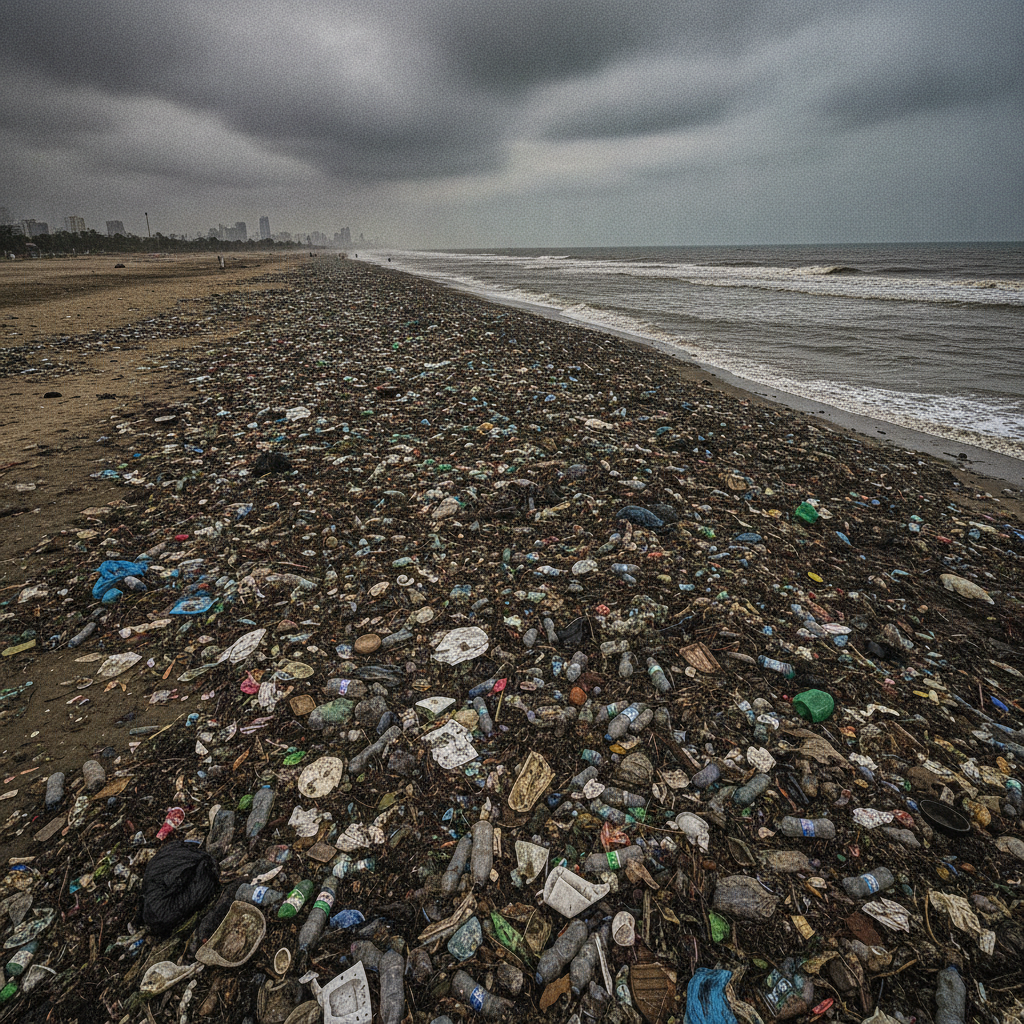
On Sunday, the iconic Juhu Beach in Mumbai was closed to the public and patrolled by lifeguards after a high tide in the Arabian Sea washed a massive amount of plastic waste, sewage, and other debris onto the shoreline. The incident created an unpleasant environment for visitors and raised heightened concerns among environmentalists and residents regarding the city's marine pollution and waste management practices.
Following the high tide, large quantities of plastic bottles, food wrappers, thermocol, discarded footwear, cloth, coconuts, and other household waste were washed ashore by the Arabian Sea. Patches of sewage-laden water were also seen along parts of the beach. This created a highly unpleasant environment for morning walkers, visitors, and local vendors who frequent the area. In response to the accumulation of waste, the Mumbai Police closed the beach, while lifeguards patrolled the area to monitor the situation.
According to experts, much of the waste originates from drains, rivers, and nullahs that carry garbage into the sea, especially during the monsoon. Strong waves and tidal movements then push the accumulated debris back onto the coastline, effectively returning the city's own waste to its beaches. Residents and environmentalists noted that this recurring issue reflects an urgent need for better waste management and coastal conservation.
Mumbai, known as one of the most populated cities in the world, is located on the western coast of India on the narrow peninsula of Salsette Island. It is surrounded by the Arabian Sea to the west and south, while Thane Creek bounds it to the east. While the city is known for its beauty and heritage sites, its defining coastline and beaches are increasingly burdened by human-generated waste, posing a serious environmental challenge.
Juhu Beach is one of the most visited tourist destinations and plays an important role in the city's coastal ecosystem. However, the repeated accumulation of plastic and sewage not only affects the appearance of the beach but also poses severe risks to marine life, birds, and public health. Animals often mistake plastic for food, while contaminated water can degrade coastal habitats.