Korlai Villagers Revive 400-Year-Old Rain Prayer Procession Amid Dry Spell
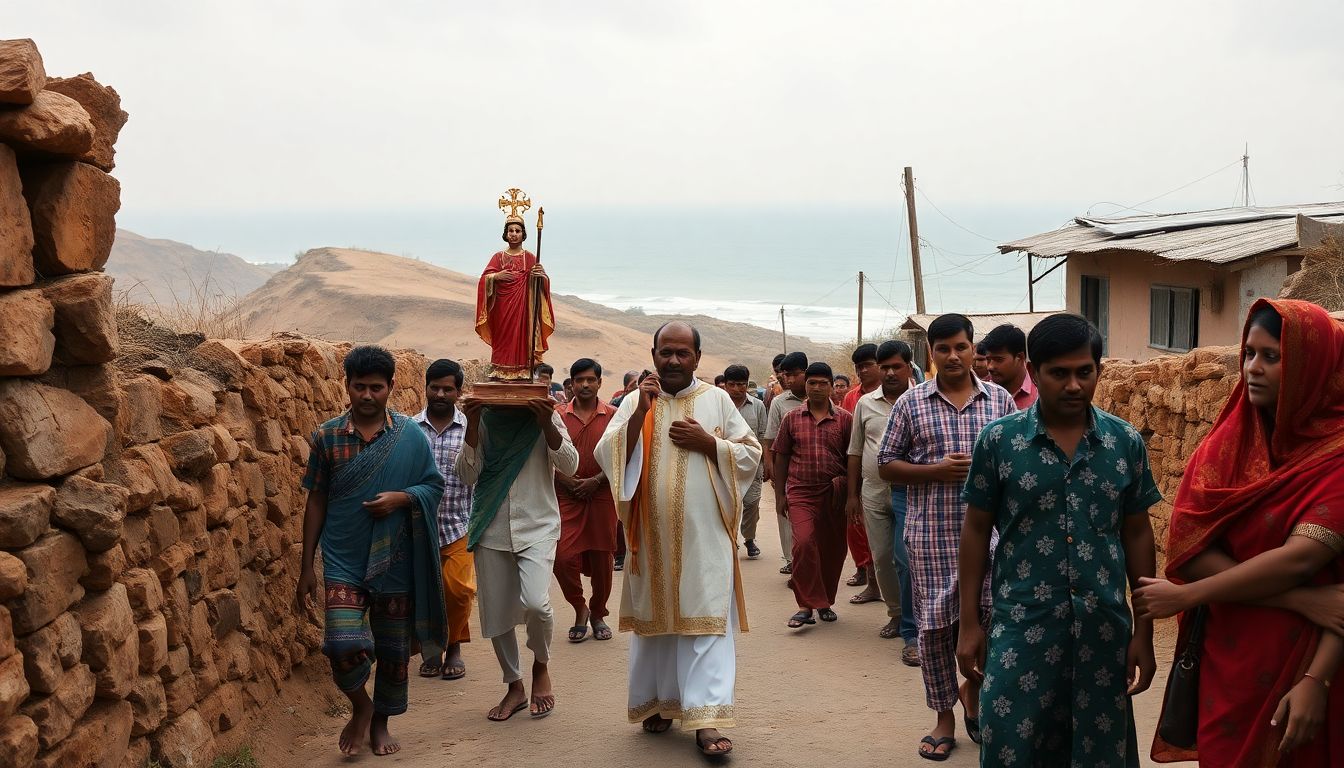
On Thursday, residents of the picturesque coastal village of Korlai, located near Revdanda in Maharashtra's Raigad district, revived a centuries-old tradition by holding a solemn procession with the statue of St. Anthony to pray for rain. Led by Parish Priest Father Bonaventure Nunes, the villagers gathered to walk through the narrow lanes of the locality to seek relief from a prolonged dry spell as the monsoon season continued to falter.
The procession served as a living expression of a 400-year-old cultural and religious identity. Korlai, which is perched on a hill overlooking the Arabian Sea, is recognized as one of the world's last surviving pockets of Indo-Portuguese Creole. The local language, known as Kristi or Korlai Portuguese, is spoken by many villagers and is regarded by linguists as one of the rarest surviving Portuguese-based Creole languages in the world.
The village traces its historical origins back to the 16th century, when the Portuguese established a strategic outpost after capturing the Korlai Fort. Standing guard over the mouth of the Kundalika River, the fort witnessed fierce battles between the Portuguese and the Marathas, remaining a reminder of the Konkan coast's turbulent colonial history.
Although Portuguese political authority disappeared centuries ago, its cultural and religious imprint remains deeply rooted in Korlai's Catholic community. History enthusiast Godfrey Pimenta noted that today, Korlai remains a living testament to this historical fusion, as the villagers have actively preserved their distinctive language, customs, and Catholic faith across generations.
Religious feasts, processions, and community devotions continue to shape daily life in the village, blending centuries-old Portuguese traditions with local Konkani culture. The annual prayers for rain, passed down through generations, illustrate how faith and heritage remain inseparable in Korlai. As uncertain skies continue to test farmers and coastal communities across Maharashtra, the quiet procession offered a reminder of a cultural legacy that has withstood the test of time.