Palghar and Mumbai Floods Trigger Push for Rainwater Harvesting to Curb Runoff
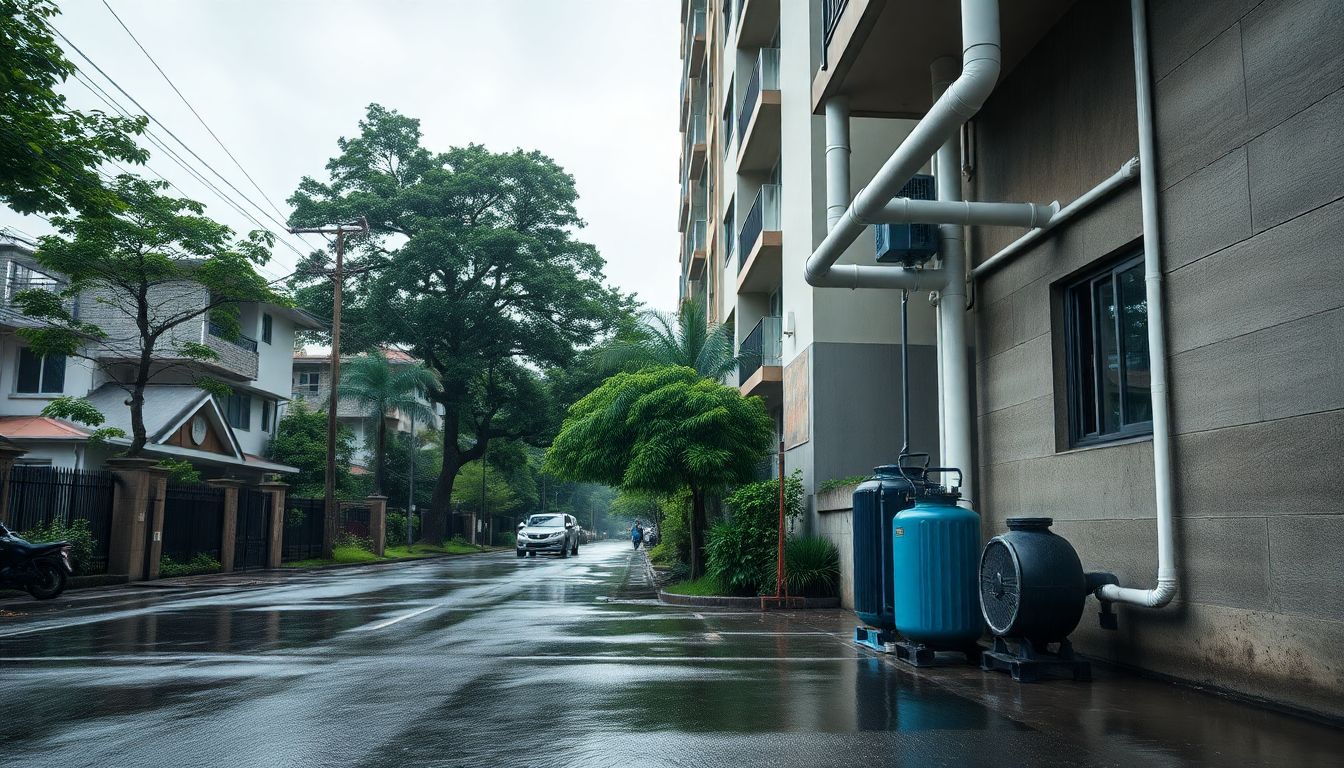
During the first week of July, heavy rainfall of 386 to 445 billion litres battered Mumbai and the neighbouring Palghar district, leaving residents marooned for days, triggering a 10 per cent municipal water cut, and prompting environmental advocates to urge the implementation of decentralized rainwater harvesting (RWH) to mitigate severe urban flooding. Localities such as Naigaon and Chakala have previously demonstrated how localized RWH installations can successfully prevent waterlogging on parade grounds and streets.
The intense precipitation in early July brought 1,000 mm of rain in a single week—surpassing the typical monthly average of 768 to 920 mm. However, approximately 85% to 90% of this rainwater, amounting to between 332 and 400 billion litres, was lost as surface runoff that washed into the sea. In Palghar, the resulting floods marooned residents for three to five days without electricity or drinking water.
In response to recurring monsoon flooding, the government recently proposed a Rs 13,000-crore "sponge city" flood mitigation plan to absorb rainwater through bioretention parks, detention-infiltration tanks, and permeable pavements. However, environmental advocates are championing decentralized RWH as an immediate solution to soak up water in situ and prevent runoff from accumulating in low-lying areas.
Between 1991 and 2018, Mumbai lost 81% of its open land, 40% of its green cover, and 30% of its water bodies to concretisation, making flash floods more common when heavy rains coincide with high tides.
Several local institutions have already successfully implemented RWH to combat flooding. At the Armed Police Headquarters in Naigaon, a series of three-kilometre-long trenches was dug along three parade grounds and connected to nine borewells. Aswati Dorje, additional director general of police, stated that the system not only resolved water scarcity for 2,000 residential family members but also kept the main parade ground dry enough for drills during the monsoon.
Similarly, at Chakala on the Andheri-Kurla Road, Holy Family Church parish priest Fr Gerard Rodricks installed stone, gravel, and charcoal trenches a decade ago to stop water from gushing down their hillock property. The project successfully reduced mud and runoff flowing onto the adjacent road.
Additionally, organizations like the Aga Khan Agency for Habitat India plan to install grass pavers to enhance rainwater infiltration in Mira Bhayandar and Chandrapur after the monsoon.