Planners Oppose Plan to Turn Bandra's Neville D'Souza Ground into Convention Centre
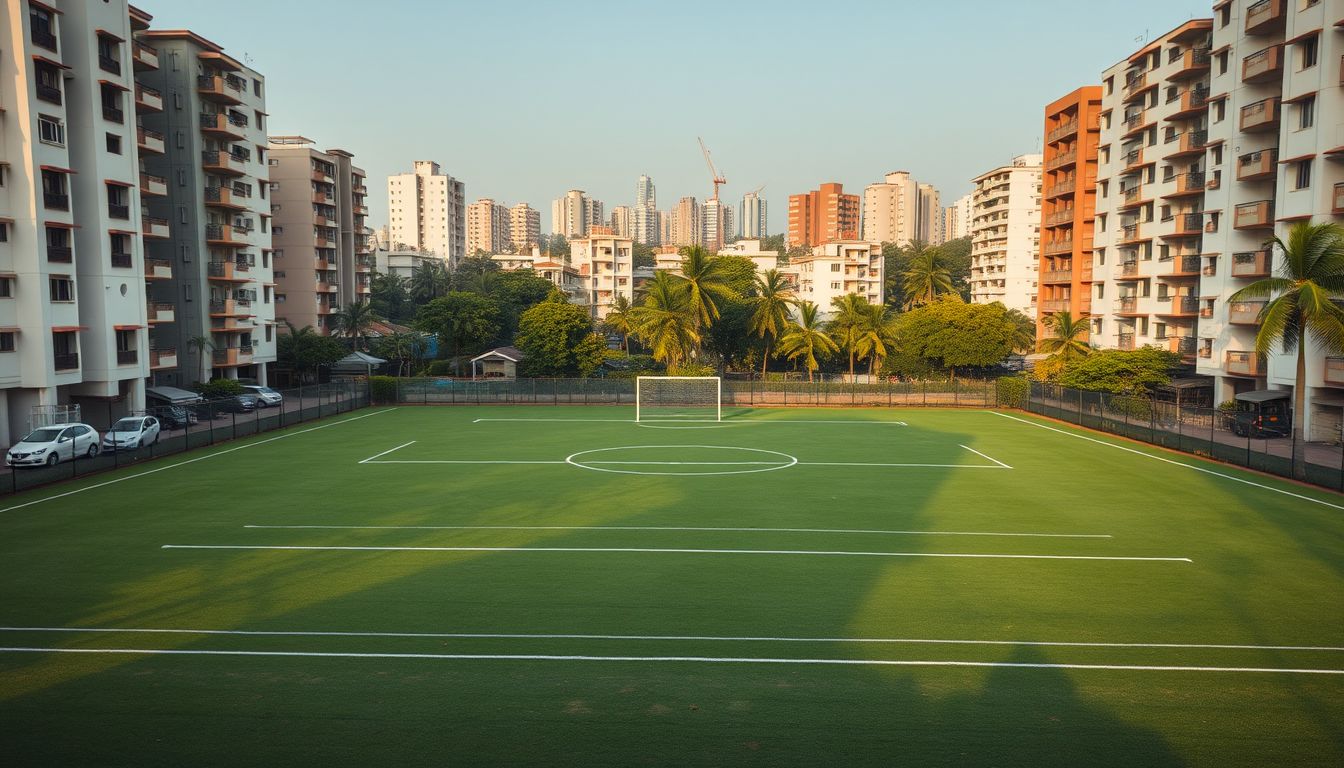
A group of urban planners and architects has urged the urban development department to reject a proposed modification in Development Plan 2034 that would change the reservation of the Neville D’Souza Football Ground in Bandra from a playground, maidan, and open-space reservation into an exhibition and convention centre.
The change in reservation was cleared in the Brihanmumbai Municipal Corporation general body meeting on Tuesday. Following the clearance, the group, named Urban Centre Mumbai, submitted a formal representation dated August 19 to the principal secretary of the urban development department-1, stating that the proposed conversion would result in the loss of a valuable public open space in a city already severely deficient in such amenities.
The representation was signed by the group’s principal director Pankaj Joshi and director of spatial planning and community development Urmi Kenia. The planners noted that the BMC’s own assessment during the preparation of DP 2034 acknowledged a severe shortage of public open spaces across Mumbai. The city has approximately 0.88 square metres of open space per capita, compared to the 10 to 12 square metres recommended under Urban and Regional Development Plans Formulation and Implementation guidelines and about nine square metres recommended by the World Health Organisation.
The planners argued that there was no preparatory study or evidence establishing the need for an exhibition or convention centre at the specific Bandra site. They stated that open spaces should not be evaluated merely on whether a built-up commercial activity can be accommodated on the plot, emphasizing that land available for public open space is extremely scarce and cannot be treated simply as a development opportunity.
The group warned that allowing the change could set a precedent for other public open spaces to face similar dilution or commercial exploitation. It called for cumulative ward-level deficiencies in open spaces to be evaluated through transparent and verifiable data before approving any changes in reservation.
The representation also raised constitutional and legal concerns under Article 21 and Article 14, while invoking environmental safeguards and the Public Trust Doctrine, which mandates that public resources are held by the state in trust for public use.