SITA 2025 Report Outlines Tech Solutions to Handle 10 Billion Air Passengers
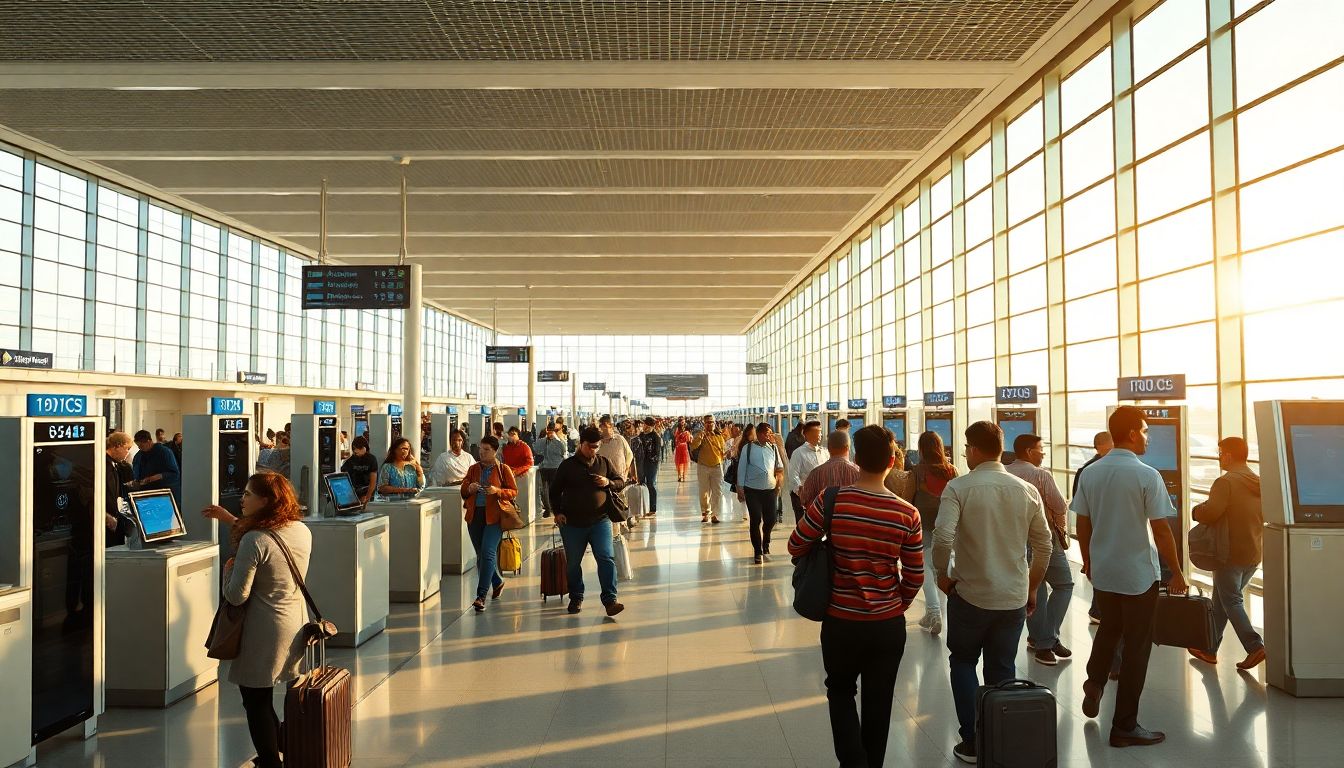
MUMBAI — Global aviation IT firm SITA has released its Impact Report 2025, detailing how the air transport industry is adopting artificial intelligence, biometric technology, and software upgrades to manage up to 10 billion passengers annually by 2050 without doubling physical infrastructure.
According to projections from the International Air Transport Association (IATA) cited in the report, the global aviation industry is expected to carry 8 billion passengers annually within 20 to 25 years, reaching 10 billion by 2050. SITA's report highlights that software and digital solutions, rather than physical expansion, are becoming the primary drivers to add capacity, manage disruptions, and reduce environmental impacts.
Biometric technology is already accelerating border processing. In Singapore, residents now clear immigration in 10 seconds without passports using face and iris biometrics. In Aruba, pre-cleared passengers complete border processing on arrival in eight seconds, representing a 78 percent speed increase. SITA also supports risk assessments for more than 271 million travelers annually, with most assessments completed in under four seconds.
Artificial intelligence is also transitioning from trial phases into live operations. SITA OptiFlight, which uses machine learning and digital twin modeling to recommend fuel-efficient flight profiles, processed 2.9 million flights for 59 airline customers in 2025. This saved 1.27 lakh tons of fuel and reduced CO2 emissions by 4.03 lakh tons.
Other AI-driven tools, such as Total Airport Management, are recovering turnaround times at Toronto Pearson and Abu Dhabi Airports. At Thai Airways, SITA's automated routing system cut the time needed to rebook mishandled bags onto new flights from three minutes to one second.
The report also highlighted technological resilience during major disruptions. During the global CrowdStrike outage, more than 460 flights continued operating using SITA Maestro DCS. In France, a 2025 proof of concept at the Reims Control Centre cut weather-driven delays by up to 65 percent, saving 1.05 lakh delay minutes over a 21-day period.
Additionally, SITA reported that the number of truly lost bags fell by 90 percent for airlines participating in its partnership with Apple and Google when location sharing was used through SITA WorldTracer.
SITA's financial results reflected this technological shift, with its 2025 revenue growing 7 percent to US$1.71 billion. SITA also reduced its own emissions by 1.3 percent year-on-year and now sources 90 percent of its office electricity from renewable sources.
SITA Chief Executive Officer David Lavorel stated that the shift to move twice as many travelers without doubling infrastructure is already underway, with airports scaling capacity within existing buildings and governments clearing borders before passengers reach queues.