Survey of 1,115 Mumbai Trees Finds 684 Choked By Concrete Bases
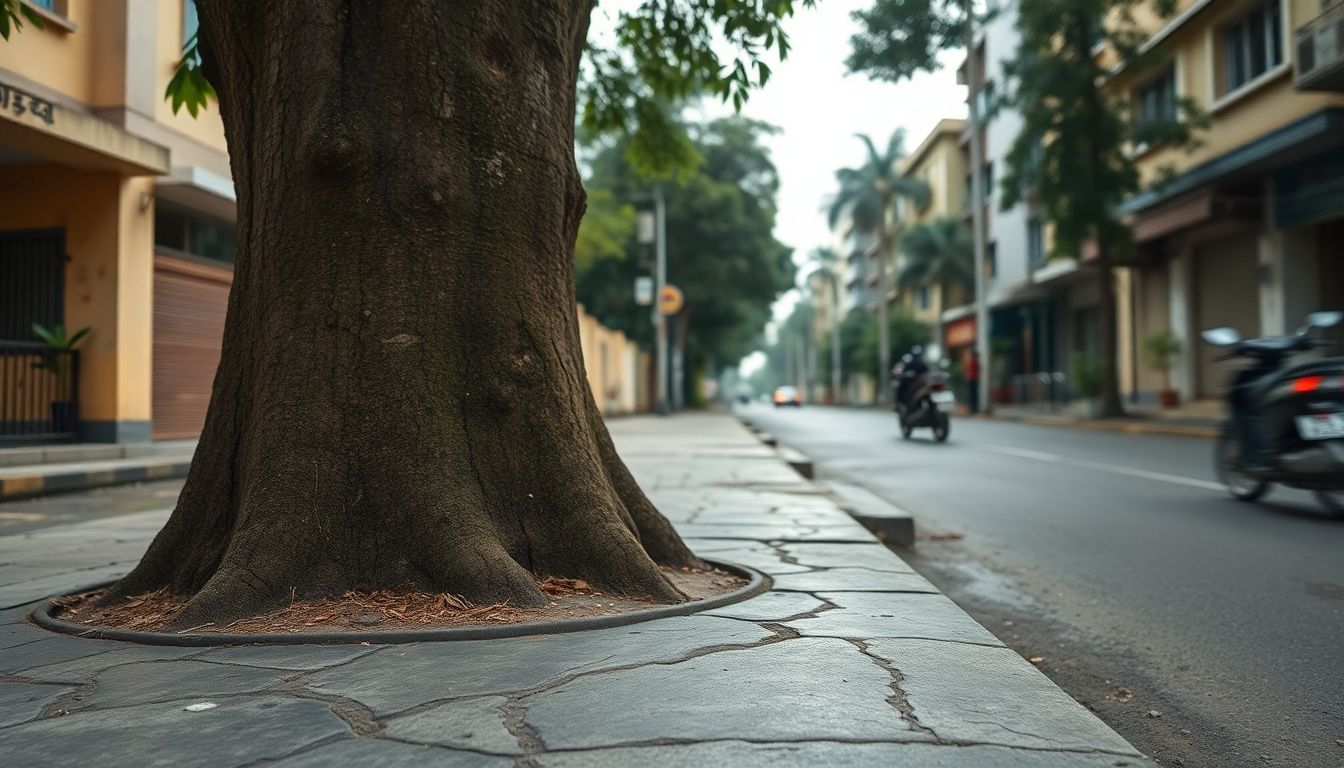
On June 25, 2026, a joint survey conducted by environmental activist Rohit Joshi, 20 volunteers, and officials from the Brihanmumbai Municipal Corporation (BMC) across 12 neighbourhoods in Mumbai and its suburbs revealed that 684 out of 1,115 inspected trees have concrete bases.
The audit found that 61.34% of the surveyed trees are choked by concrete, while 50 trees are either dead or dangerously inclined. This poses a severe risk of fatal collapse to the public, particularly during the monsoon rains.
The single-day survey follows a petition filed by Joshi in the Bombay High Court in 2023. Joshi filed the petition alongside family members of two victims of tree falls, seeking to force the de-concretisation of tree bases across the city.
According to the survey findings, the extensive concreting around the trees has left little to no exposed soil for water infiltration and gaseous exchange. Joshi stated that the team discovered buried root flares, which cause chronic physiological stress, reduce oxygen availability, and increase the trees' susceptibility to decay organisms.
Additionally, many trees were found tied up with utility cables, surrounded by drainage infrastructure, signposts, and utility chambers, which limits their rooting space. Construction debris was also found dumped in tree basins, further reducing soil permeability.
The survey highlighted that the lack of action violates a 2013 National Green Tribunal (NGT) order. The NGT order mandated that all tree bases must have a one-meter breathing space to ensure their survival and stability.
The team also studied previously fallen trees, discovering that they often had hollow trunks, advanced rot, root collar decay, and deteriorated structural roots. Joshi pointed out that these findings reveal systemic structural issues rather than isolated instances of decay, meaning mature trees can appear to have healthy canopies despite to severe internal rot.
Arborist Vaibhav Raje explained that tree collapses are typically caused by multiple stresses. Soil compaction, concretisation, hidden decay, poor pruning, and root damage from road or utility works all contribute to weakening a tree's anchoring system, making them vulnerable to heavy rains and winds. Raje recommended providing trees with adequate rooting space of two to three metres for larger and older trees.
Jitendra Pardeshi, the superintendent of the BMC’s gardens department, did not respond to requests for comment on the survey findings.