Vasai Residents Protest Reclamation of Traditional Ponds for Housing Projects
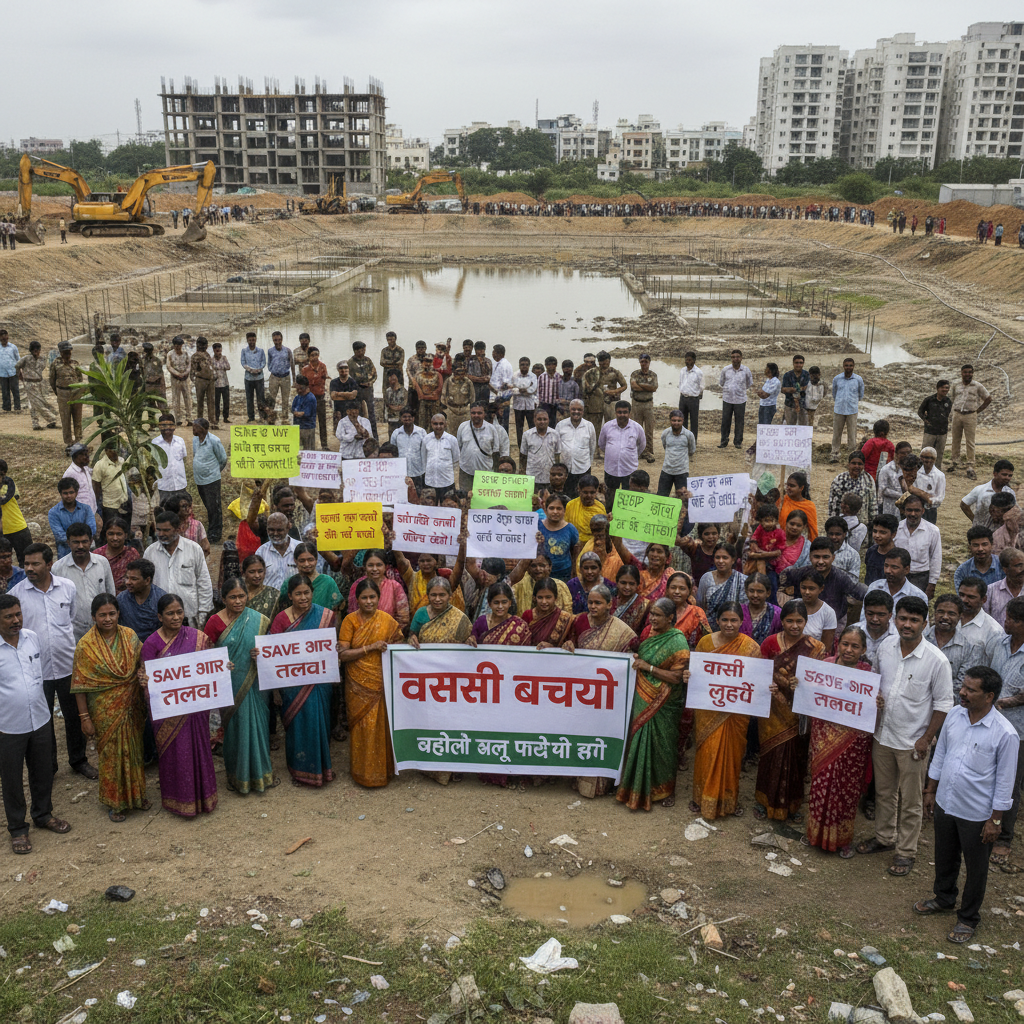
Local residents in Vasai, Maharashtra, have launched protests to stop the reclamation and burial of their traditional ponds, known as bavkhals, which are being filled to make way for residential developments. The community-led resistance aims to protect these centuries-old water bodies to preserve local aquifers and prevent severe water scarcity in the region.
Bavkhals are centuries-old private and communal ponds, some as large as an acre, that act as a crucial network for rainwater harvesting. There are at least 800 such ponds scattered across the Vasai taluka in Palghar district. An ongoing survey by the Aga Khan Agency for Habitat has already mapped 569 of these water bodies in west Vasai using GIS data and site visits.
According to local resident Ranjeet Vartak, many of these ponds are being systematically destroyed for financial gain. Land in Vasai's villages is currently valued between Rs 30 lakh and Rs 50 lakh per guntha, while a typical bavkhal covers an area of 2 to 35 gunthas.
In Bhuigaon Village, an informal housing settlement now stands on a 3,067-square-meter site that was once a public pond on revenue land. Although the pond still appears on the 1998 CIDCO Development Plan Ariel Survey, it has been filled, and the land is now occupied by privately owned asbestos sheds rented to migrant workers.
Similarly, in Rewad Wadi’s Chopra Farm, 70 percent of a local pond has already been filled. In Jasodi Village, another pond was sold by a local family to a builder, who has constructed upscale villas on the reclaimed site.
These traditional water bodies are vital to the local ecosystem, as they replenish groundwater and sustain the region's water supply, especially in rural areas where municipal pipelines frequently run dry.
The current protests echo the region's historic 'Pani Andolan' of the 1980s and 1990s, when local villages mobilized against the commercial extraction of water by tankers. Residents are now fighting to ensure the physical survival of the water bodies themselves.