Mumbai Auto and Taxi Drivers Alter Routes Amid Marathi Language Enforcement Drive
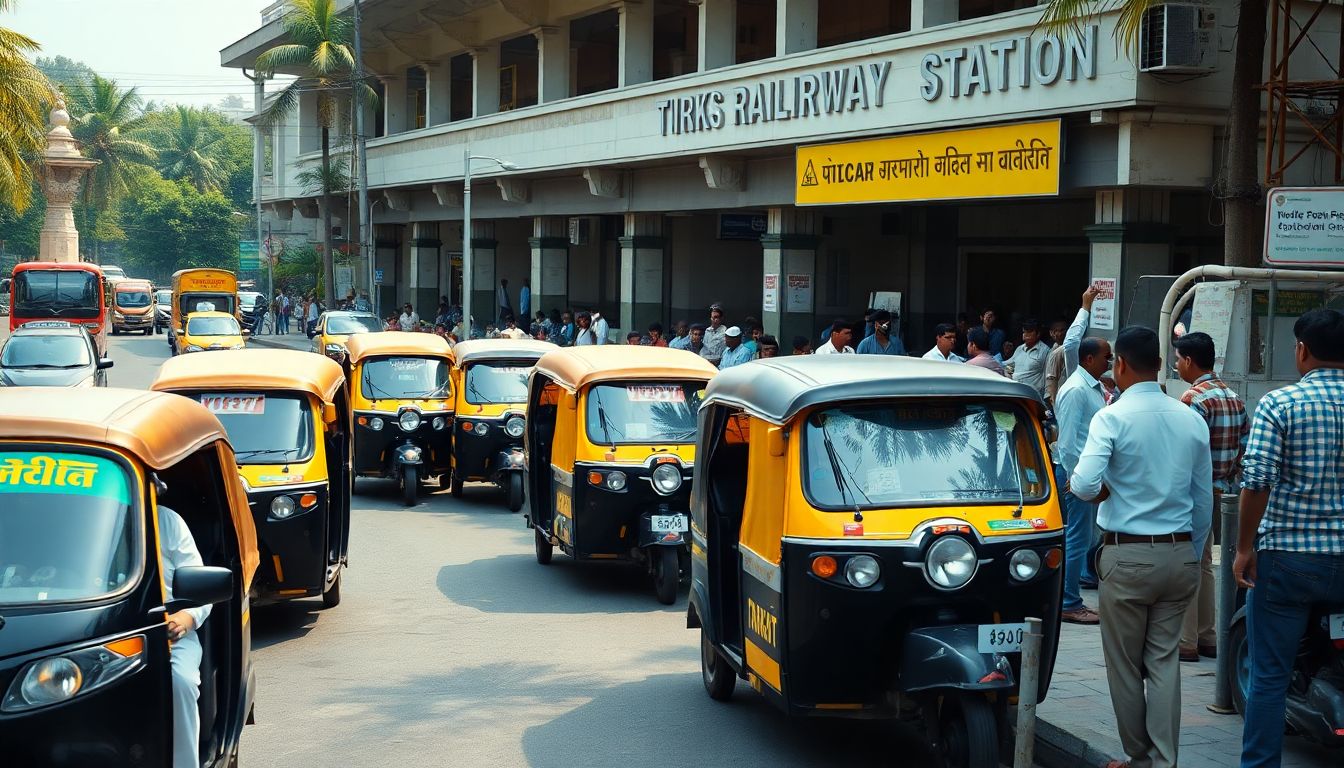
A recent enforcement drive requiring autorickshaw and taxi drivers to demonstrate a working knowledge of Marathi has disrupted daily commuting patterns across Mumbai. Drivers have begun altering their typical routes to evade inspections near railway stations and commercial centres, while others have temporarily taken their vehicles off the road, leading to localized transport shortages.
The policy was introduced as a practical measure to improve communication between drivers and commuters. However, the implementation of language checks has led to operational hurdles across the city's transport network.
To help drivers meet the requirement, official training programmes were conducted. However, widely circulated video footage from the sessions showed that much of the syllabus focused on formal and literary registers of Marathi rather than the colloquial language used in daily city transit. Drivers noted that formal vocabulary does not assist with negotiating fares or explaining route adjustments in traffic.
Following the conclusion of the government-run training facilities, drivers were instructed to arrange tutorials independently, leaving many without institutional support to meet the mandate.
Regional Transport Offices have deployed their finite enforcement capacity to monitor compliance. In Mumbai, where formal public transport still leaves significant last-mile connectivity gaps, autorickshaws and taxis provide an essential service that the broader transit system has not fully replaced.
The resulting avoidance of major transit hubs by drivers has created friction for daily commuters who depend on three-wheelers and cabs to bridge last-mile connections across different parts of the city.