NITI Aayog Proposes School Clusters to Help 14500 Small Maharashtra Schools
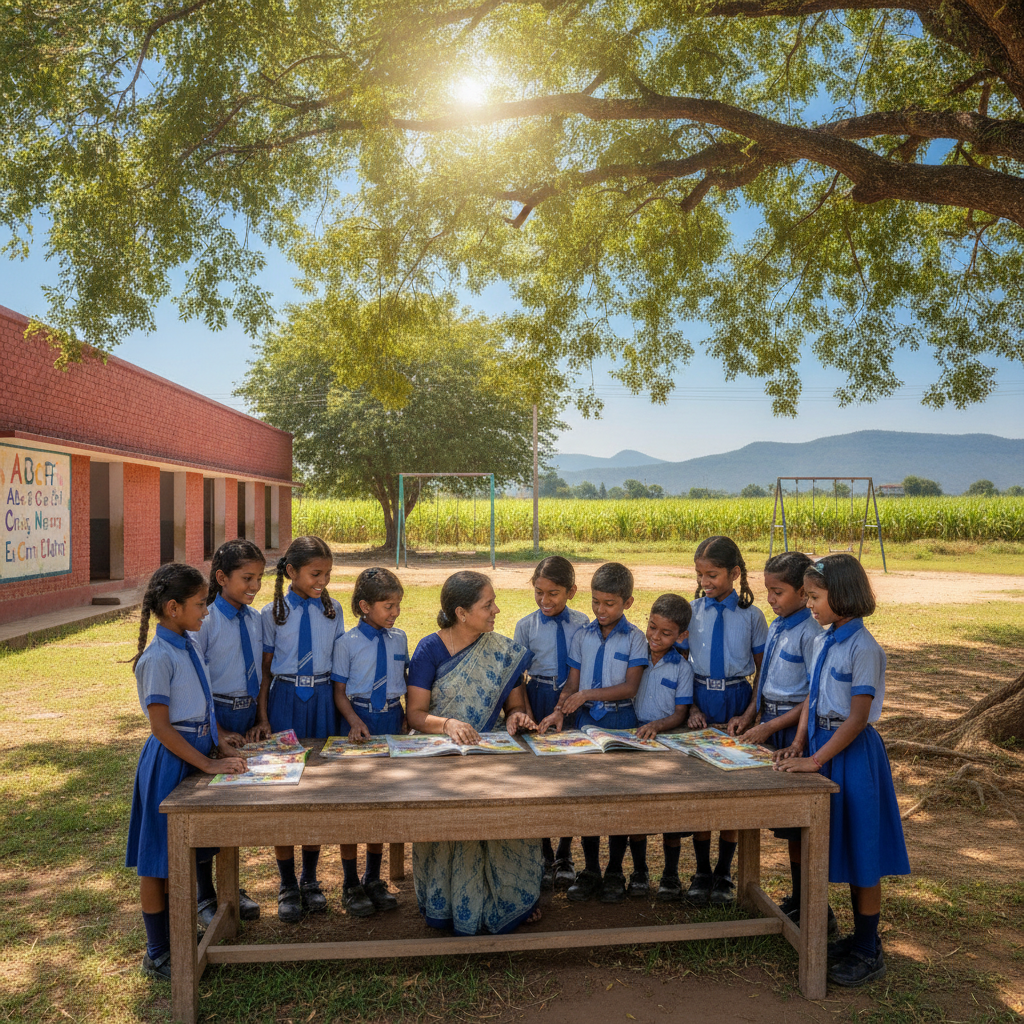
On Wednesday, the government policy body NITI Aayog published a report proposing the creation of "school clusters" to improve learning quality, a policy that could significantly impact around 14,500 schools in Maharashtra with fewer than 10 students each. The proposal, highlighted in Mumbai, aims to address teacher shortages and resource gaps by allowing nearby schools to share educators, libraries, laboratories, and sports facilities.
According to the report, India currently has approximately 1.47 million schools and more than 246.9 million students. While primary education access has expanded, a significant number of children still drop out before completing their higher secondary education. This issue is particularly acute in rural areas, where the number of available schools decreases at higher education levels.
The NITI Aayog report also highlighted ongoing challenges with learning quality and teacher shortages. Many students struggle to apply their knowledge to daily life, and rural teachers face limited access to mentoring and professional development. Additionally, smaller and remote schools frequently lack adequate libraries, digital tools, and facilities for children with special needs.
By forming school clusters, the policy body hopes to give students from smaller schools access to better resources and specialized teachers. Education experts have supported the idea as a more efficient way to utilize government resources.
However, the proposal has met with concern from local communities in Maharashtra. Parents fear that school mergers under a cluster system would force their children to travel longer distances to attend class. Teachers' associations have also warned that any implementation must be handled carefully to avoid restricting children's access to education.
This is not the first time the concept has been introduced in the state. In 2023, the Maharashtra government introduced its own cluster school policy, but the initiative was put on hold following widespread opposition from various stakeholders.
The report also detailed shifting enrolment trends across India. The share of students enrolled in government schools fell from 54.3% in 2014-15 to 49.25% in 2024-25. Meanwhile, enrolment in private unaided institutions rose from 31.7% to 38.8% during the same period. Government-aided schools continue to represent about one-tenth of total enrolment.