Powai Lake overflows as heavy rain boosts Mumbai reservoir levels
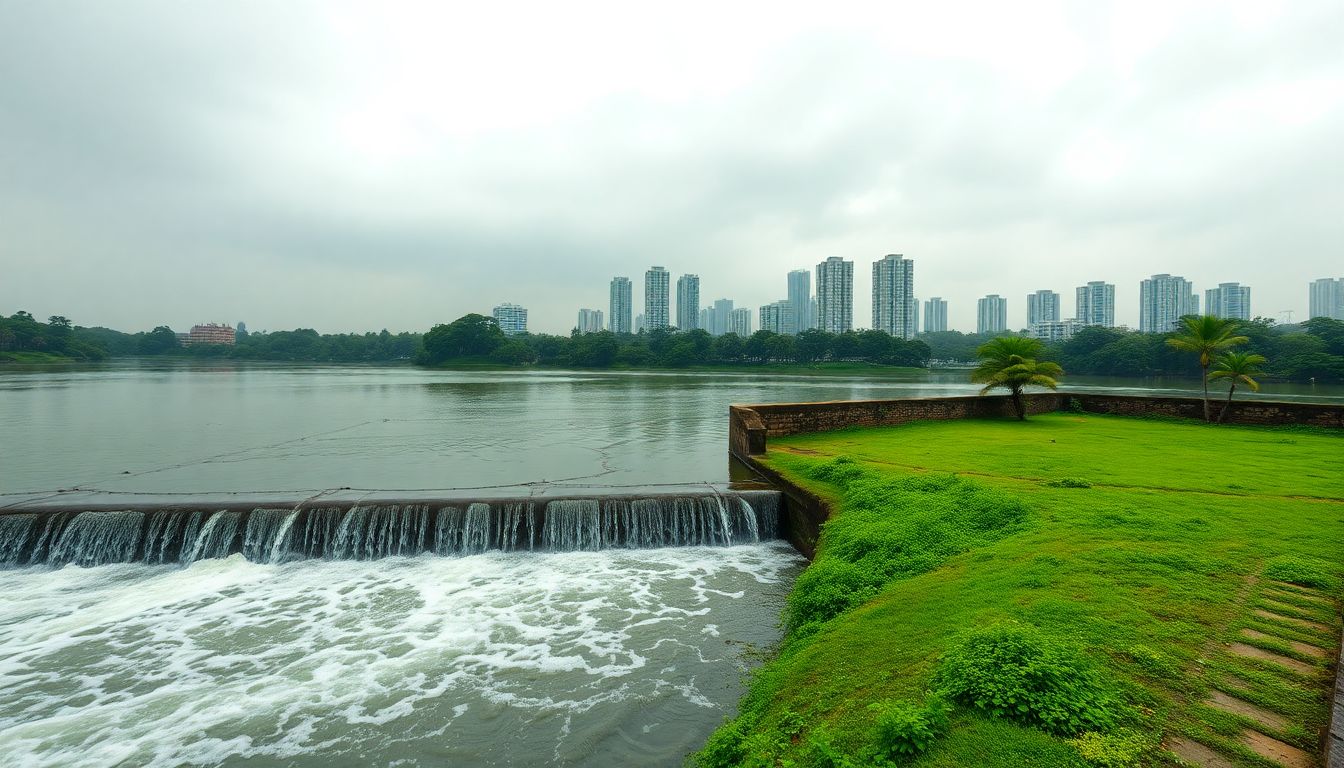
Powai Lake reached its full storage capacity and began overflowing at approximately 5:30 a.m. on Wednesday following two days of heavy rainfall in the area. The overnight downpour has also brought significant relief to the wider city by boosting water levels in the key drinking water reservoirs that supply Mumbai.
According to civic officials from the Brihanmumbai Municipal Corporation (BMC), Powai Lake is an artificial water body with a total storage capacity of 545 crore litres. The water from this lake is not used for drinking, but is instead utilized strictly for industrial and other non-potable purposes, which includes supplying water to the Aarey Milk Colony.
The recent heavy rainfall across the catchment areas of Mumbai's seven drinking water lakes has provided a major boost to the city's depleting reserves. The fresh inflows from the heavy rains added nearly two days' worth of water to the reservoir system. This has raised the total stock to 1.03 lakh million litres, which represents 7.18% of the combined capacity of the lakes.
BMC officials confirmed that the newly accumulated water is now sufficient to meet the city's drinking water needs until August 20. This development has rekindled hopes of easing the ongoing water crisis in the metropolitan area.
The rise in reservoir levels follows a period of strict conservation measures. The BMC had imposed a 10% water cut across Mumbai and its suburbs starting on May 15 due to rapidly depleting lake levels. Along with the water cut, the civic body had also suspended water supply to construction sites and swimming pools, frozen all new water connections, and curtailed commercial water consumption.
The BMC currently supplies about 4,100 million litres of water daily to the city. To comfortably meet Mumbai's annual drinking water demand, a total storage of 14.47 lakh million litres is required to be accumulated in the reservoirs by October 1.