Water Tests Reveal Severe Pollution at Navi Mumbai DPS Flamingo Lake
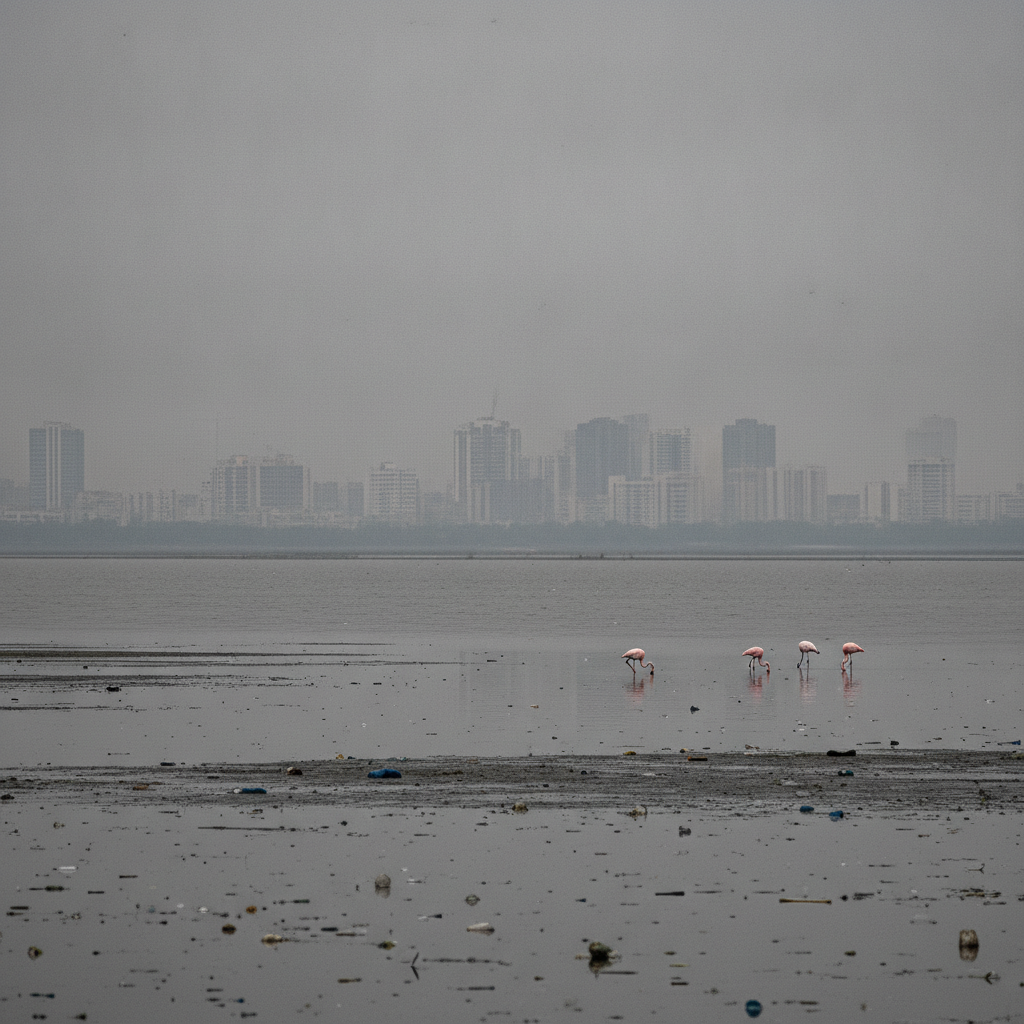
Recent water quality tests at DPS Flamingo Lake in Navi Mumbai, which forms part of the Thane Creek Flamingo Sanctuary ecosystem, have revealed alarming contamination levels with Total Dissolved Solids (TDS) exceeding nine times the permissible limit. Commissioned by the Navi Mumbai Environment Preservation Society and the NatConnect Foundation, the findings have prompted urgent demands for granting Conservation Reserve status to the lake to protect the declining flamingo population.
The latest test results showed TDS levels at 19,600 mg/l, significantly higher than the permissible limit of 2,100 mg/l under the IS 2490:1974 inland surface water standards. This indicates that highly polluted creek water is entering the wetland, posing a severe threat to the local ecosystem.
B.N. Kumar, the director of NatConnect Foundation, stated that the toxic mix of polluted tidal inflows and extensive blue-green algal mats appears to have pushed DPS Flamingo Lake towards an ecological tipping point. Kumar urged authorities to expedite the final Government Resolution to grant Conservation Reserve status to the lake to ensure stronger legal protection.
This is not the first time the wetland has shown high pollution levels. A sample collected from the lake in March recorded a TDS level of 21,720 mg/l. In April, a drain discharging into the wetland showed TDS levels of 7,950 mg/l and a Biochemical Oxygen Demand (BOD) of 36.4 mg/l, exceeding permissible limits. All three samples failed to meet inland water quality standards.
Sandeep Sareen, a representative of the Navi Mumbai Environment Preservation Society, explained that while flamingos can tolerate natural salinity, they cannot thrive in water contaminated with sewage and urban runoff. Sareen warned that the deteriorating water quality is steadily eroding the lake's ecological balance and shrinking its food base.
Flamingos are highly vulnerable to changes in water chemistry because they depend on specific salinity levels to sustain the algae, diatoms, and microscopic organisms they eat. Environmentalists warn that the diminishing presence of flamingos at the lake is an early warning sign that the fragile wetland is under growing ecological stress.