Western Railway to replace worn-out buffers at Churchgate and Mumbai Central
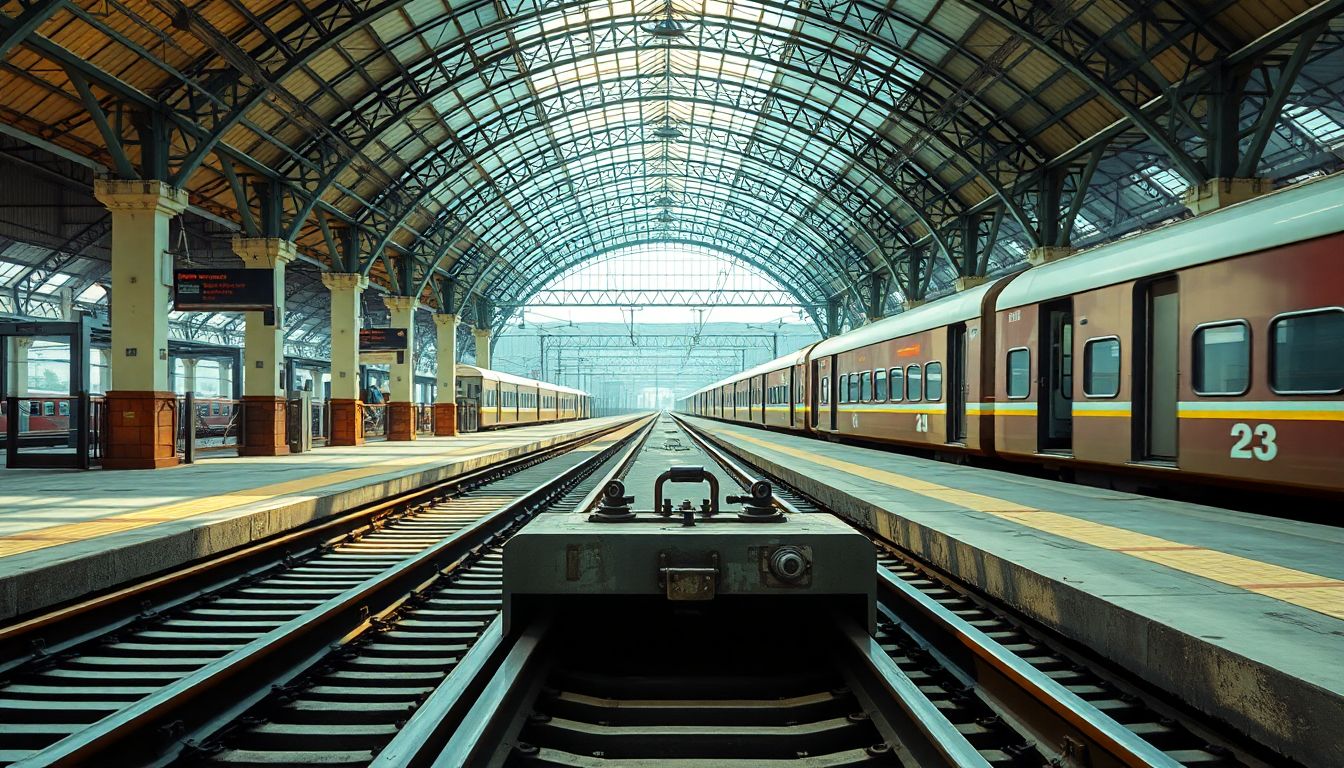
Western Railway's Mumbai Central Division has approved the replacement of decades-old, worn-out hydraulic buffer stops at Churchgate station and Mumbai Central station. The project will install modern, high-capacity hydraulic buffers capable of absorbing train impacts at speeds of up to 15 kmph to enhance passenger safety and protect station infrastructure at these busy terminals.
The upgrade will target Platforms 1, 2, and 4 at Churchgate station and Platform 4 at Mumbai Central station. The existing buffers at these locations, which were installed between 1906 and 1958, have become worn out after decades of continuous service. Railway officials stated that the older equipment is now beyond economical repair, prompting the decision to replace them on a priority basis.
Under a turnkey contract, the project will cover the design, fabrication, supply, installation, testing, and commissioning of the new systems. In total, Western Railway will install four buffer sets comprising eight hydraulic buffers.
Both Churchgate and Mumbai Central serve as critical terminal stations for Mumbai's suburban network and long-distance trains, including the Rajdhani Express, August Kranti Rajdhani, Shatabdi Express, and Humsafar Express. Because these stations feature dead-end platforms, hydraulic buffers serve as a crucial safety measure to stop trains if they overshoot the platform.
The new systems will be installed in accordance with the latest Research Designs and Standards Organisation (RDSO) specifications issued in November 2024. Designed as high-capacity energy absorption systems, the new buffers can safely arrest a fully loaded passenger train weighing approximately 1,300 tonnes traveling at speeds of up to 15 kmph without causing structural damage to the coaches or the buffer stops.
The modern buffers will be compatible with both Centre Buffer Coupler (CBC) and conventional side-buffer rolling stock used by Indian Railways.
Railway officials stated that the new equipment is designed for a minimum service life of 20 years and will require no major maintenance for at least 36 months, except in the event of an accident. Built to withstand Mumbai's humid coastal environment, the buffers will also feature high-visibility red-and-white reflective paint to improve identification for train operators.